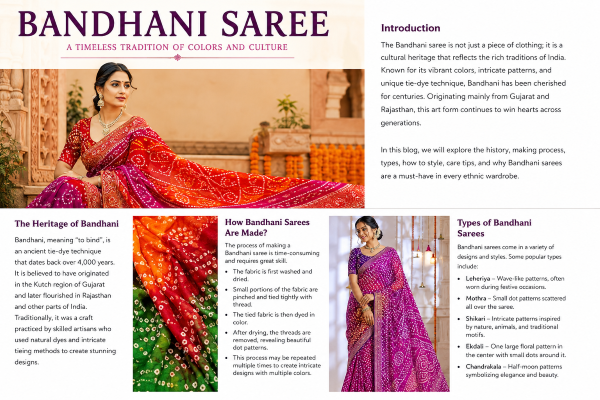
Introduction
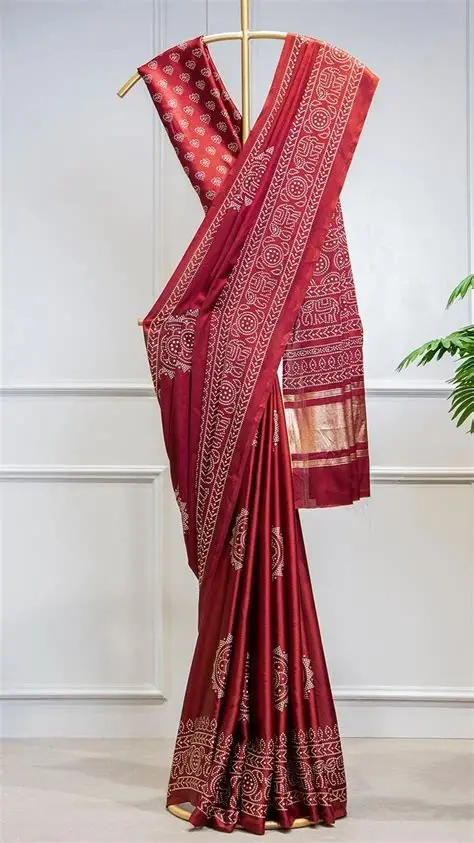
A Bandhani saree is one of India’s most treasured traditional garments, admired for its vibrant colors, intricate patterns, and centuries-old craftsmanship. Known for its unique tie-and-dye technique, Bandhani sarees represent a beautiful blend of culture, tradition, and artistic excellence. Originating primarily from the states of Gujarat and Rajasthan, these sarees have become a favorite choice for weddings, festivals, religious ceremonies, and special occasions across the country.
The word “Bandhani” comes from the Sanskrit word Bandh, meaning “to tie.” Every Bandhani saree is created by carefully tying thousands of tiny knots on fabric before dyeing it. When the knots are opened, they reveal stunning dotted patterns that make each saree unique.
In this article, we will explore the history, making process, types, fabrics, styling ideas, care tips, and reasons why Bandhani sarees continue to remain popular among women of all ages.
History of Bandhani Sarees
Bandhani is believed to be one of the oldest forms of tie-dye textile art in the world. Historical evidence suggests that this craft has existed in India for more than 5,000 years. Ancient paintings, sculptures, and literary texts mention garments featuring tie-dye designs similar to modern Bandhani.
The craft flourished in the Kutch region of Gujarat and later spread to Rajasthan, where skilled artisans developed distinctive styles and motifs. Traditionally, Bandhani sarees were worn by royal families and wealthy merchants, symbolizing prosperity and celebration.
Today, Bandhani continues to thrive as a cherished handcraft passed down through generations of artisan families.
How Is a Bandhani Saree Made?
Creating a Bandhani saree requires exceptional patience, precision, and skill. Depending on the complexity of the design, a single saree may take several days or even weeks to complete.
The process generally includes:
1. Fabric Selection
Artisans begin by selecting fabrics such as silk, cotton, georgette, chiffon, muslin, or crepe.
2. Designing the Pattern
Traditional motifs are lightly marked on the fabric using washable outlines.
3. Tying the Fabric
Thousands of tiny portions of fabric are pinched and tightly tied with thread to prevent dye from reaching those areas.
4. Dyeing
The tied fabric is dipped into natural or synthetic dyes. Multiple rounds of tying and dyeing create multicolored designs.
5. Drying and Untying
After drying, the threads are carefully removed, revealing the beautiful dotted patterns that define Bandhani.
Each handcrafted saree carries slight variations, making every piece unique.
Popular Types of Bandhani Sarees
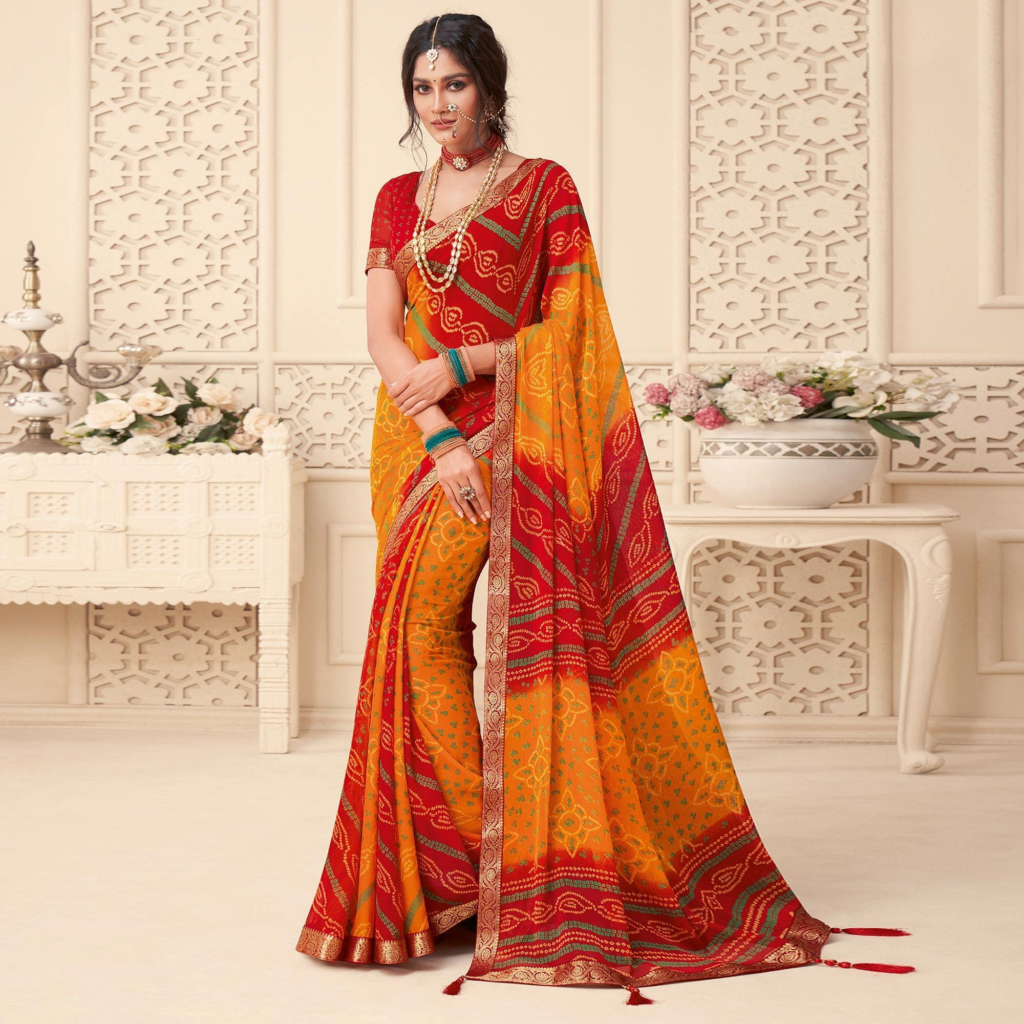
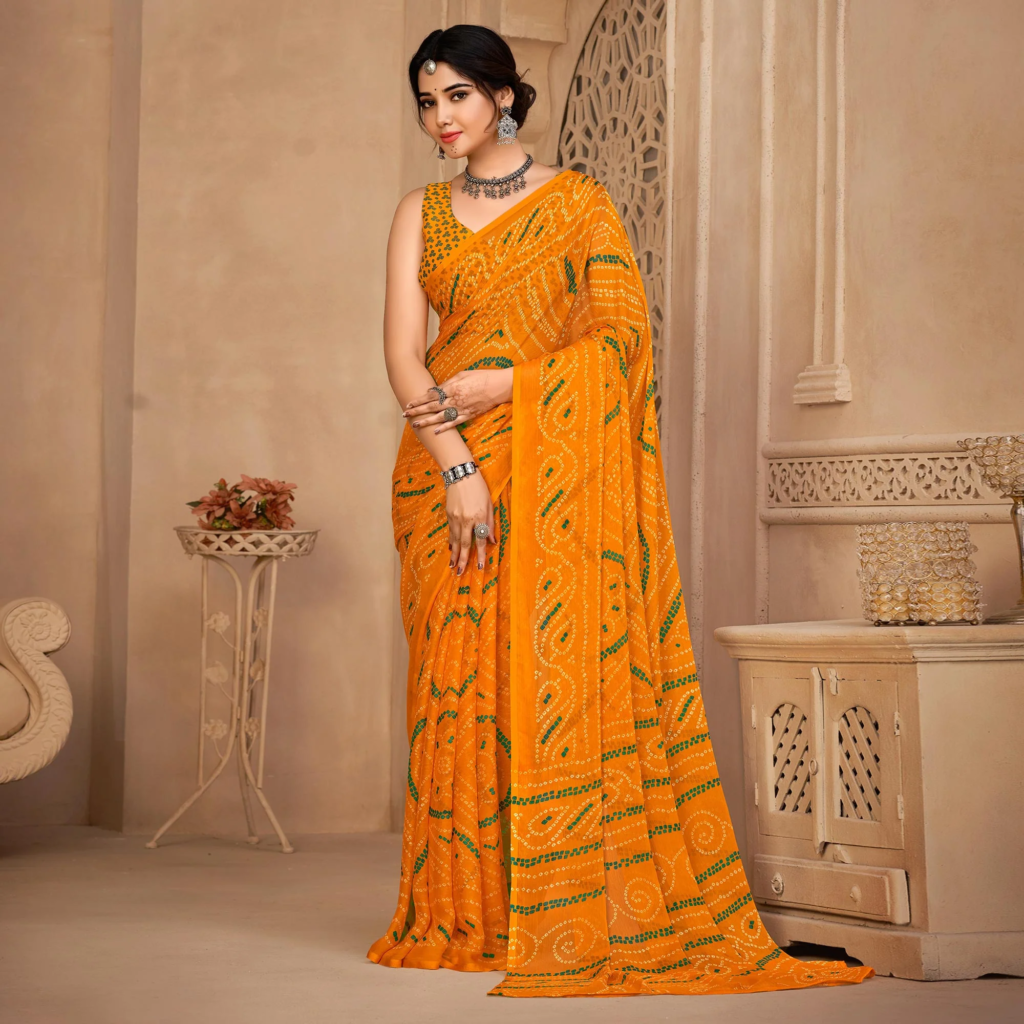
Bandhani sarees come in various regional styles and patterns.
Leheriya Bandhani
Leheriya features flowing wave-like stripes and is especially popular during festive celebrations in Rajasthan.
Mothra Bandhani
This style combines crisscross lines with dotted motifs, creating elegant geometric patterns.
Shikari Bandhani
Shikari designs are highly detailed and often depict flowers, birds, animals, and nature-inspired artwork.
Ekdali Bandhani
Ekdali sarees feature larger central motifs surrounded by smaller dots, creating a graceful appearance.
Chandrokhani Bandhani
Known for its intricate circular arrangements and decorative borders, Chandrokhani Bandhani is commonly chosen for weddings and special occasions.
Fabrics Used in Bandhani Sarees
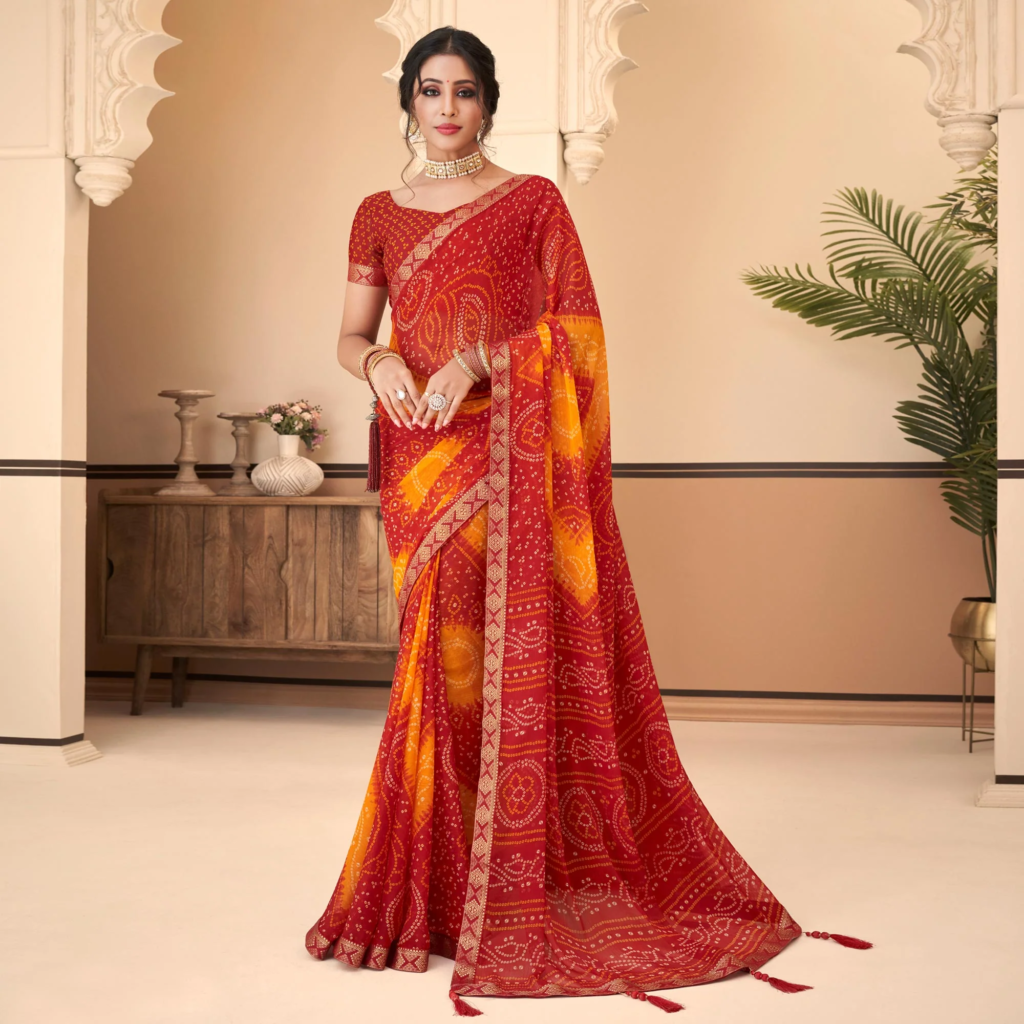
Bandhani sarees are available in several fabrics to suit different occasions and climates.
Silk
Silk Bandhani sarees are luxurious and ideal for weddings, receptions, and grand celebrations.
Cotton
Cotton Bandhani sarees are lightweight, breathable, and perfect for everyday ethnic wear.
Georgette
Georgette drapes beautifully and offers a modern, elegant look suitable for parties.
Chiffon
Chiffon Bandhani sarees are soft, flowy, and comfortable for summer events.
Crepe
Crepe Bandhani sarees combine elegance with easy maintenance and are suitable for formal occasions.
Colors and Their Traditional Significance
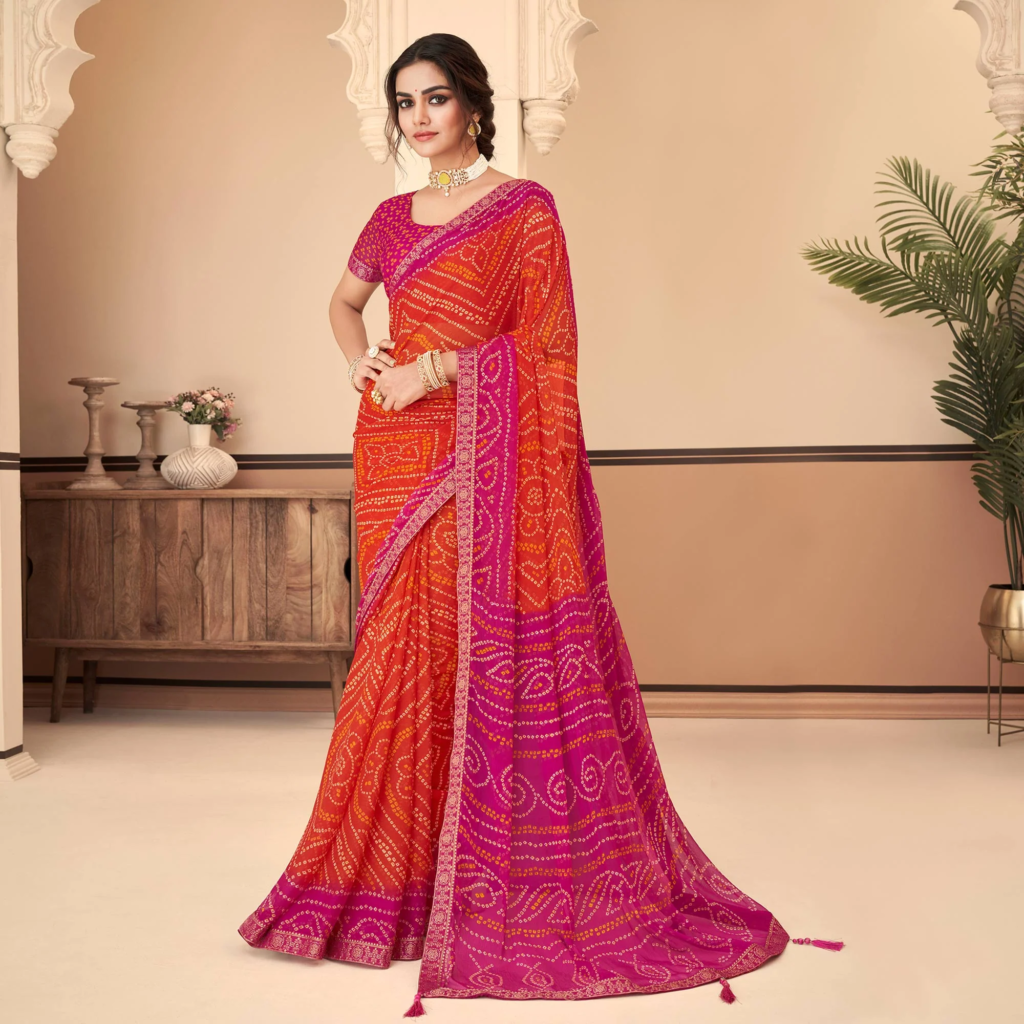
Colors play an important role in Bandhani traditions.
- Red: Love, marriage, and prosperity
- Yellow: Happiness, knowledge, and spirituality
- Green: Fertility and new beginnings
- Blue: Calmness and confidence
- Pink: Joy, femininity, and celebration
- Orange: Energy and devotion
- Maroon: Royal elegance and cultural richness
Many bridal Bandhani sarees feature combinations of red, maroon, green, and gold.
Why Bandhani Sarees Remain Popular
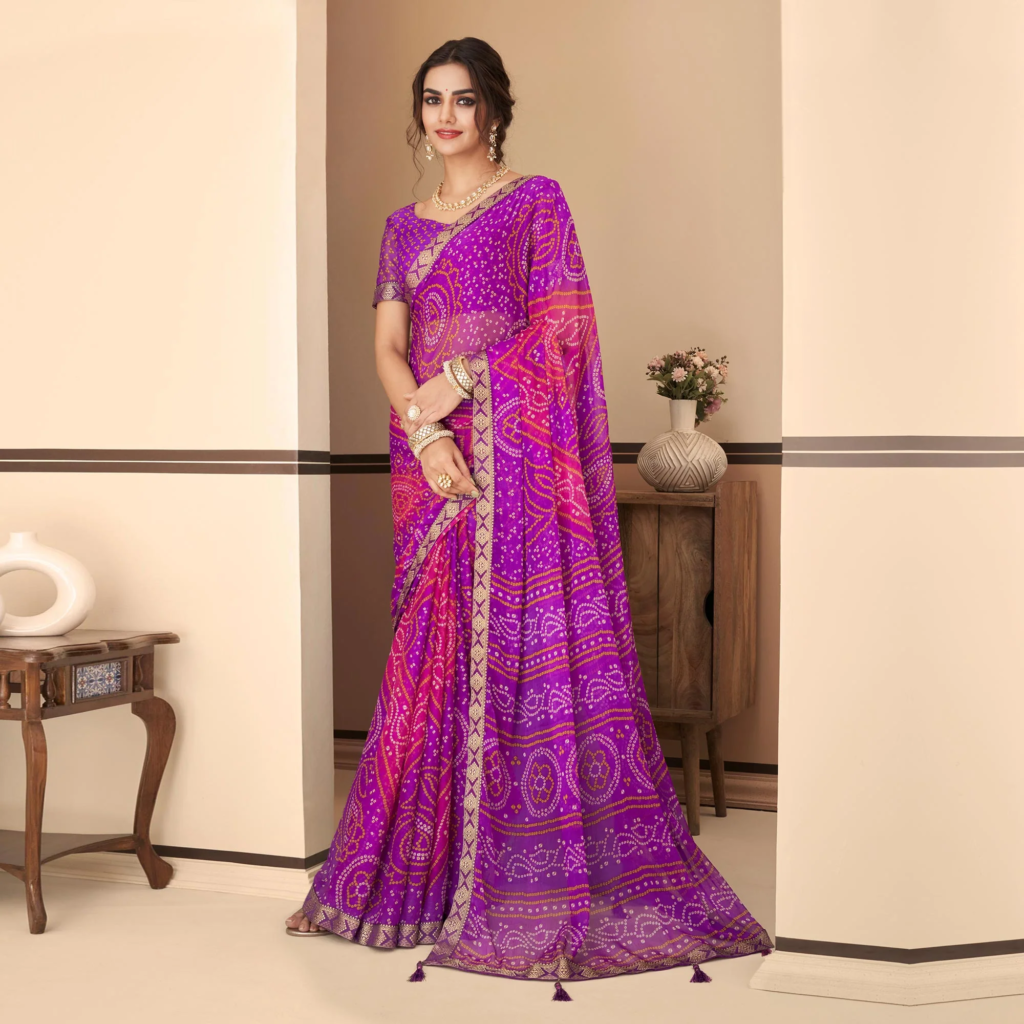
Several factors contribute to the lasting appeal of Bandhani sarees.
Rich Cultural Heritage
Every saree reflects India’s centuries-old textile traditions.
Handcrafted Beauty
Each piece is handmade, making it unique and full of character.
Suitable for Every Occasion
Bandhani sarees can be worn for festivals, weddings, family gatherings, office celebrations, and cultural events.
Wide Variety
They are available in different fabrics, colors, and price ranges to suit diverse preferences.
Timeless Fashion
Despite changing trends, Bandhani remains fashionable and continues to inspire contemporary ethnic wear.
How to Style a Bandhani Saree
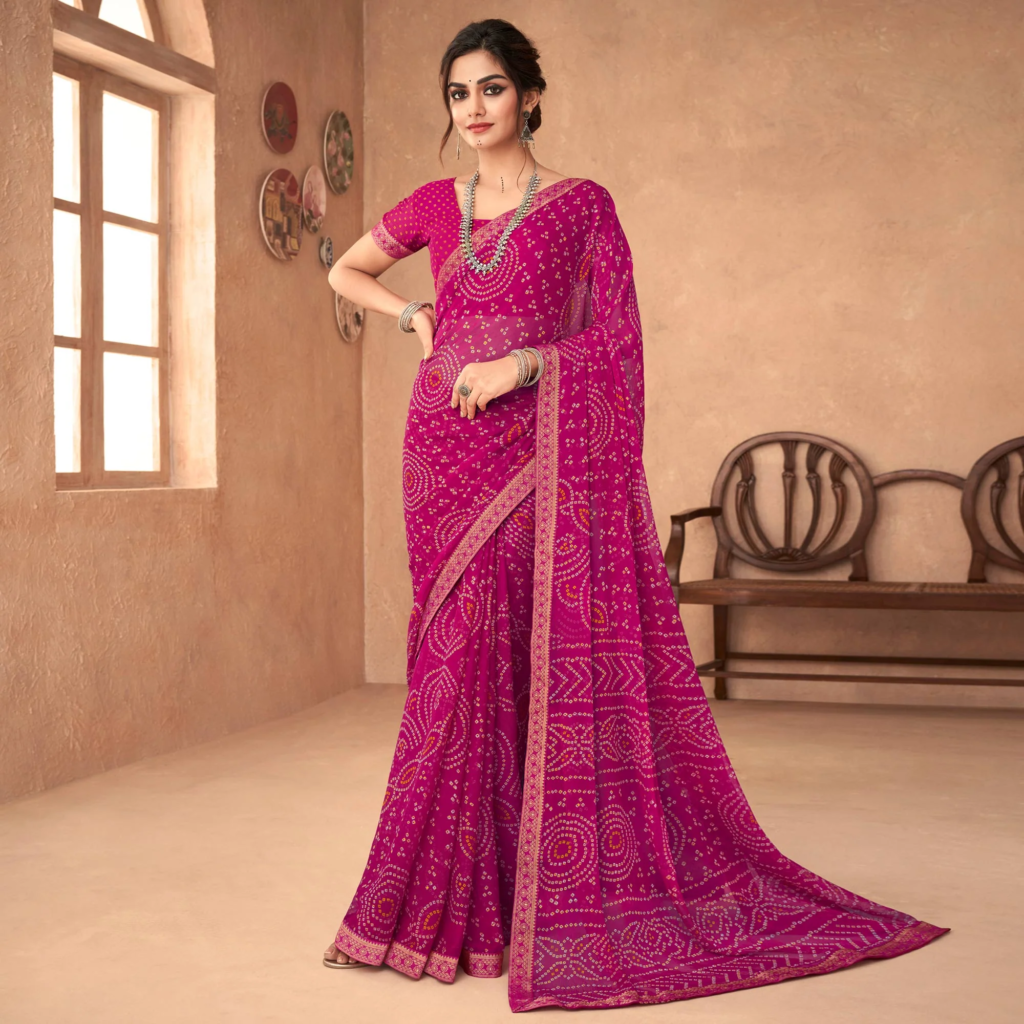
Styling can enhance the beauty of a Bandhani saree while reflecting your personal taste.
- Pair it with embroidered or plain contrast blouses.
- Choose traditional silver, gold, or oxidized jewelry.
- Add bangles, jhumkas, or a statement necklace for festive occasions.
- Wear embellished sandals or ethnic footwear.
- Keep makeup elegant with bold lips or subtle eye makeup.
- Complete the look with a neatly tied bun decorated with fresh flowers or soft curls.
Modern fashion also embraces Bandhani with designer blouses, belts, jackets, and fusion accessories for a contemporary appearance.
Caring for Your Bandhani Saree
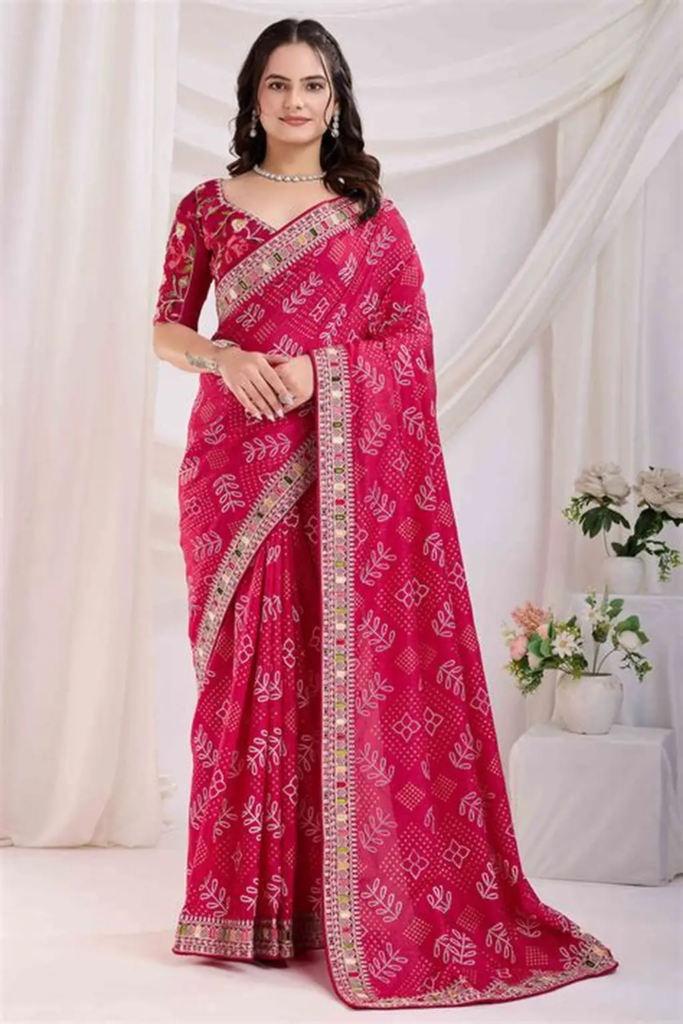
Proper care helps preserve the colors and fabric for years.
- Prefer dry cleaning, especially for silk Bandhani.
- Wash cotton Bandhani gently using mild detergent if recommended.
- Avoid harsh chemicals and bleach.
- Dry the saree in shade to prevent color fading.
- Store it in a cotton or muslin cloth instead of plastic covers.
- Refold the saree occasionally to avoid permanent creases.
- Iron on low heat using a protective cloth.
With proper maintenance, a Bandhani saree can remain beautiful for generations.
Bandhani Sarees in Modern Fashion
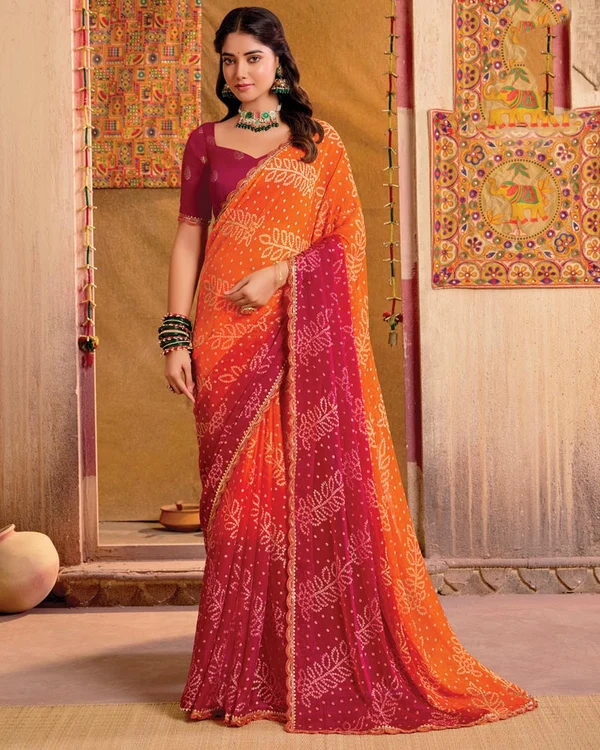
Today, Bandhani has evolved beyond traditional sarees. Designers incorporate Bandhani patterns into lehengas, dupattas, kurtas, gowns, jackets, and contemporary fusion wear. Celebrities and fashion influencers frequently showcase Bandhani outfits during festive seasons, helping introduce this traditional craft to younger audiences.
Sustainable fashion has also increased appreciation for handcrafted Bandhani textiles, as many consumers now value artisan-made products and traditional weaving techniques over mass-produced garments.
Conclusion
A Bandhani saree is far more than traditional attire—it is a celebration of India’s artistic heritage, skilled craftsmanship, and vibrant cultural traditions. From its ancient origins in Gujarat and Rajasthan to its continued presence in modern fashion, Bandhani has maintained its timeless appeal through intricate hand-tied patterns and brilliant colors.
Whether you are attending a wedding, celebrating a festival, or simply embracing traditional Indian fashion, a Bandhani saree offers elegance, versatility, and cultural significance. Investing in a handcrafted Bandhani saree not only enhances your wardrobe but also supports the talented artisans who have preserved this remarkable textile tradition for generations.
Its enduring beauty ensures that Bandhani will remain one of India’s most cherished and iconic saree styles for years to come.