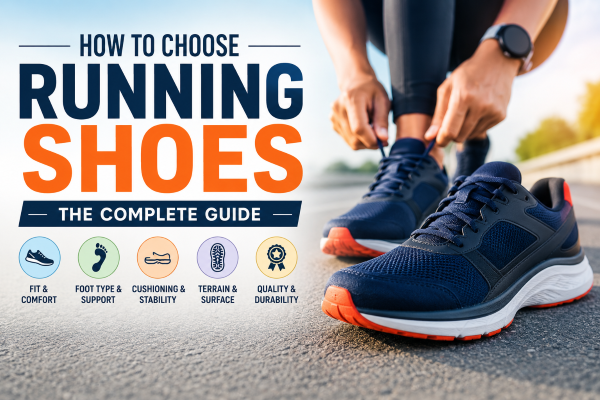
Choosing the right running shoes can make a big difference in your comfort, performance, and overall running experience. With hundreds of models available in different shapes, materials, cushioning levels, and prices, finding the right pair can feel confusing. A good running shoe should feel comfortable, suit your running style, and provide the support you need without causing unnecessary pressure on your feet.
Whether you are buying your first pair of running shoes or replacing an old one, understanding a few basic factors can help you make a smarter decision.
Why Choosing the Right Running Shoes Matters
Running puts repeated stress on your feet, ankles, knees, and legs. Shoes that fit poorly or do not suit your running needs may cause discomfort, blisters, or pain.
The right shoes do not necessarily have to be the most expensive ones. Instead, they should match your foot shape, running surface, distance, and personal comfort.
A comfortable pair can also make running more enjoyable and help you stay consistent with your fitness routine.
1. Know What Type of Running You Do
Before buying shoes, think about where and how you normally run.
Road running shoes are designed for pavements, roads, sidewalks, and treadmills. They usually have relatively smooth outsoles and are made to provide cushioning and a comfortable ride on hard surfaces.
Trail running shoes are designed for dirt paths, rocks, mud, and uneven terrain. They generally have deeper and more aggressive tread patterns for better grip.
Track shoes are specialized for running on athletic tracks and are different from everyday running shoes.
If most of your running happens on roads or a treadmill, a standard road-running shoe is usually the most practical choice.
2. Get the Right Shoe Size
Size is one of the most important considerations when choosing running shoes.
Your feet can swell slightly during running, so a shoe that feels comfortable when standing still should not be excessively tight.
When trying on shoes:
- Make sure your toes can move freely.
- Your heel should remain securely in place.
- Avoid shoes that squeeze the sides of your feet.
- Leave a little space between your longest toe and the front of the shoe.
- Try both shoes because your feet may not be exactly the same size.
It is also helpful to try shoes while wearing the socks you normally use for running.
3. Consider Your Foot Shape
Feet come in different shapes and widths. Some people have narrow feet, while others need a wider toe box.
Do not assume that a particular shoe will fit simply because it is your usual size. Different brands and models can have different shapes.
If your toes feel compressed or your foot spills over the sides of the shoe, consider a wider model. A comfortable toe box allows your toes to spread naturally while running.
4. Pay Attention to Cushioning
Running shoes are available with different levels of cushioning.
Highly cushioned shoes can provide a softer feeling and may be comfortable for long-distance running. Moderately cushioned shoes can offer a balance between comfort and responsiveness.
However, more cushioning is not automatically better.
Some runners prefer a softer, more protective feel, while others enjoy shoes that feel lighter and more responsive. Your choice should depend on what feels comfortable and works well for your running style.
5. Think About Your Running Surface
Your running environment should influence your shoe selection.
If you primarily run on concrete or asphalt, look for shoes designed for road surfaces. If you regularly run on trails, choose shoes with appropriate traction and protection.
For people who alternate between roads and light trails, some versatile shoes can work for both, although they may not provide the specialized performance of dedicated road or trail footwear.
6. Check the Shoe’s Weight
Weight can influence how a running shoe feels.
Lightweight shoes may feel quick and responsive, making them attractive for faster workouts and races. Heavier shoes may provide additional cushioning, stability, or durability.
For everyday training, comfort is generally more important than chasing the lowest possible shoe weight.
A slightly heavier shoe that feels comfortable may be a better choice than an ultralight model that causes discomfort.
7. Understand Stability Features
Some running shoes include additional features designed to provide stability.
However, you should not automatically assume that everyone needs a stability shoe. Foot movement varies from person to person, and comfort and individual needs should guide your decision.
If you have persistent discomfort while running or have previously been advised to use a particular type of footwear, consider getting professional advice from a qualified running specialist or healthcare professional.
8. Test the Shoes Before Buying
Whenever possible, walk or jog in the shoes before purchasing them.
Pay attention to:
- Heel movement
- Toe space
- Arch comfort
- Pressure points
- Overall softness or firmness
- How naturally your foot moves
Some running stores allow customers to test shoes on a treadmill or around the store. Take advantage of this opportunity.
A shoe should feel comfortable rather than requiring a long “break-in” period to become wearable.
9. Don’t Choose Shoes Only by Price
Price is an important consideration, but it should not be the deciding factor.
An expensive running shoe is not necessarily the right shoe for you. Similarly, a reasonably priced model can be an excellent choice if it fits properly and feels comfortable.
Compare construction, fit, cushioning, durability, and intended use rather than focusing only on the brand name or price tag.
10. Know When to Replace Running Shoes
Running shoes eventually lose some of their cushioning and structural properties.
The replacement period varies depending on the shoe, runner, body weight, running style, terrain, and mileage. Instead of following a rigid mileage number, watch for signs such as:
- Worn-out outsole patterns
- Reduced cushioning
- Visible damage
- Uneven wear
- New discomfort during or after running
- A noticeable change in how the shoes feel
If your shoes no longer feel supportive or comfortable, it may be time to consider a replacement.
Common Mistakes to Avoid
One common mistake is buying shoes based entirely on appearance. A stylish design is nice, but comfort and fit should come first.
Another mistake is choosing the same size or model every time without checking whether your current needs have changed.
Buying shoes that are too small is also problematic. Your feet need enough room to move naturally, particularly during longer runs.
Finally, avoid purchasing a shoe simply because it is popular. A shoe that works well for one runner may not work equally well for another.
Final Thoughts
Learning how to choose running shoes does not have to be complicated. Start by identifying where you run, how often you run, and what type of comfort you prefer. Then focus on proper sizing, foot shape, cushioning, traction, stability, and overall feel.
The best running shoe is ultimately the one that fits you comfortably and suits your individual running needs. Take your time when trying different options, walk or jog in them when possible, and pay attention to how your feet feel.
A well-fitting pair can make every run more comfortable and help you enjoy your running routine for longer.