
Introduction
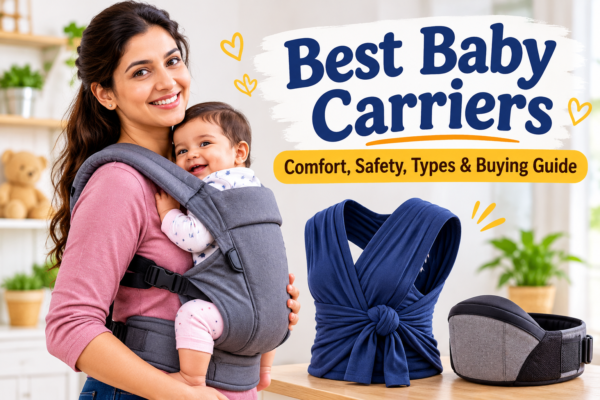
A baby carrier can make everyday life easier for parents who want to keep their baby close while keeping their hands free. Whether you are walking outdoors, travelling, shopping or completing household tasks, a well-designed carrier can provide convenience without requiring a stroller.
However, choosing the best baby carrier is not simply about selecting the most popular or expensive model. Babies have different needs at different stages, while parents also vary in body size, comfort preferences and lifestyle.
A good carrier should provide appropriate support for the baby while distributing weight comfortably for the wearer. Features such as an ergonomic seat, adjustable straps, breathable fabric and suitable head support can make a significant difference. Current buying guides in India commonly highlight soft-structured carriers, wraps, slings and hip-seat designs as the main categories.
What Is a Baby Carrier?
A baby carrier is a wearable product designed to hold an infant or young child close to an adult’s body. Unlike a stroller, it allows parents to move around while keeping the child physically close.
Baby carriers are available in several designs. Some use buckles and adjustable straps, while others rely on fabric wrapping or rings. Certain models are designed specifically for newborns, whereas others are intended for babies who have better head and trunk control.
The right choice depends largely on the baby’s age, weight, developmental stage and the parent’s intended use.
Types of Baby Carriers
1. Soft-Structured Carriers
Soft-structured carriers use padded shoulder straps, a waist belt and an adjustable fabric panel. They are among the most practical choices for everyday use because they are relatively quick to put on.
Many models offer multiple carrying positions and can be adjusted as the baby grows.
2. Baby Wraps
A wrap is a long piece of fabric that is tied around the parent’s body to create a supportive pouch for the baby.
Wraps can provide a close, comfortable fit and are popular during the newborn stage. However, they can require practice because correct wrapping and positioning are important.
3. Ring Slings
Ring slings use a length of fabric threaded through two rings. They can be convenient for short trips and quick carries, but because the weight is primarily distributed over one shoulder, they may be less comfortable for extended carrying.
4. Hip-Seat Carriers
Hip-seat carriers provide a firm platform on which the child sits. They can be particularly useful when parents frequently lift their child on and off during the day.
They are generally more appropriate for babies who have developed sufficient head and trunk control rather than very young newborns.
Features to Look for in the Best Baby Carrier
Ergonomic Baby Position
One of the most important considerations is how the carrier positions the baby’s hips and legs. An ergonomic design should support the thighs rather than allowing the legs to hang straight down. Many current guides recommend an M-shaped position, where the baby’s knees are higher than the bottom.
Adjustable Fit
A carrier should allow adjustment around both the baby and the wearer. Adjustable shoulder straps and waist belts can make the product more comfortable for different body shapes.
Head and Neck Support
Newborns cannot independently control their heads. If you intend to use a carrier from birth, select one specifically rated for newborn use and follow the manufacturer’s instructions.
Breathable Fabric
India’s warm climate makes ventilation particularly important. Mesh panels, lightweight fabrics and breathable construction can reduce heat buildup during outdoor use.
Weight Capacity
Always check the manufacturer’s stated minimum and maximum weight requirements. A carrier that is appropriate for a newborn may not remain suitable as the child becomes heavier.
Some Popular Baby Carrier Choices
Current Indian buying guides frequently mention products from brands such as R for Rabbit, Ergobaby, LuvLap, Infantino, Chicco and SoulSlings. For example, the R for Rabbit Upsy Daisy is highlighted in some India-focused guides for its multiple positions, while Ergobaby carriers are positioned as premium options.
Chicco Baby Carrier Easy Fit₹2,300·IPF – Buy Sell + others2.9 (520)
Momcozy Baby Wrap Carrier₹4,884·ubuy.co.in3.5
KeaBabies Baby Wrap Carrier₹4,018·ubuy.co.in + others4.4 (138)
Product availability, prices and specifications can change, so parents should verify the current manufacturer’s age and weight recommendations before purchasing.
Baby Carrier Safety Tips
Safety should always come before convenience. The commonly used T.I.C.K.S. guidance recommends keeping the carrier tight, keeping the baby in view, positioning the baby close enough to kiss, keeping the chin off the chest, and ensuring the baby’s back is supported.
A baby’s face should remain uncovered, and parents should regularly check the baby’s breathing and position.
Never assume that a carrier is suitable for a newborn simply because it has a front-carrying position. Check its minimum weight and age requirements carefully.
Best Baby Carrier for Different Needs
For newborns: Choose a carrier specifically approved for newborn use with appropriate head and neck support.
For everyday use: A soft-structured ergonomic carrier can be a practical choice because it combines adjustable straps with multiple carrying positions.
For hot weather: Look for lightweight, breathable or mesh materials.
For short trips: A ring sling or lightweight wrap can be convenient.
For older babies: A suitable hip-seat or structured carrier can make frequent lifting and carrying easier.
For long-term use: Consider an adjustable carrier with a broad weight range so it can grow with your child.
How to Choose the Right Carrier for India
Parents in India may want to consider climate, transportation and lifestyle before purchasing. A lightweight carrier can be especially useful in hot weather, while a compact design can make travelling by public transport easier.
If you regularly use a carrier for long walks, prioritize waist support and padded shoulder straps. If you mostly use it for quick household activities, a lightweight wrap or sling may be more practical.
The most expensive carrier is not automatically the best choice. Proper fit, appropriate positioning and suitability for the baby’s developmental stage matter more than price.
Conclusion
The best baby carrier is one that fits both the baby and the parent comfortably while providing appropriate support. Soft-structured carriers, wraps, ring slings and hip-seat carriers each have their own advantages.
Before buying, consider the baby’s age and weight, ergonomic positioning, head support, ventilation, adjustability and carrying positions. Most importantly, follow the manufacturer’s instructions and established safe-babywearing practices.
With the right carrier, parents can enjoy greater mobility while keeping their little one comfortably close during everyday activities.