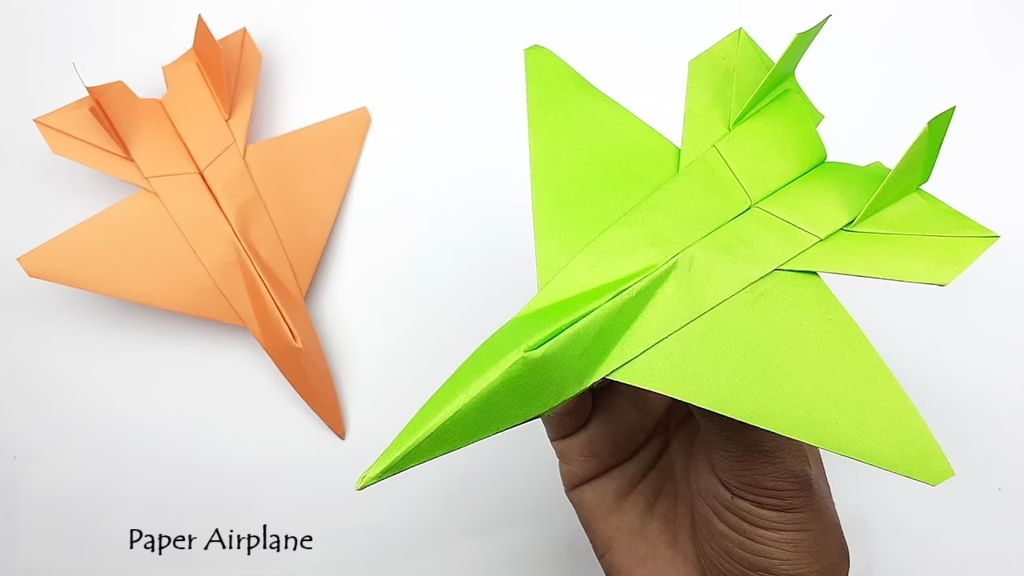
Making a paper airplane is one of those timeless activities that never gets old. Whether you’re in a classroom, at home, or just looking for a fun way to pass the time, folding a simple sheet of paper into something that can fly is both entertaining and surprisingly satisfying. The best part? You don’t need any special tools—just a piece of paper and a little creativity.

Why Paper Airplanes Are Fun and Educational
Paper airplanes aren’t just toys; they’re a hands-on way to learn about the basics of aerodynamics. When you throw your plane, you’re experimenting with concepts like lift, drag, thrust, and gravity—even if you don’t realize it. That’s why teachers often use paper airplanes as a fun introduction to science.
What You’ll Need
- A standard sheet of printer paper (8.5 x 11 inches works best)
- A flat surface for folding
- Optional: Markers or stickers if you want to decorate your plane

Step-by-Step Instructions
Step 1: Fold the Paper in Half
Start with your sheet of paper placed vertically (portrait orientation). Fold it lengthwise down the middle so the two long edges line up. Press down firmly to make a sharp crease, then unfold it again. This crease will be your guide.
Step 2: Make the Nose
Take the top two corners of the paper and fold them inward toward the center crease, forming a triangle at the top. This is the beginning of the pointed nose of your airplane.
Step 3: Fold the Nose Down
Take the newly created triangle tip and fold it down so that the point touches the bottom of the folds you just made. This creates a flatter nose, which helps with flight balance.
Step 4: Fold the Corners Again
Now, take the top corners again and fold them toward the center crease, just like before. You should see a sharper point forming at the nose.
Step 5: Fold It in Half
Fold the entire paper in half along the original crease so that the folded edges are on the outside.
Step 6: Make the Wings
To create the wings, fold down one side of the paper at an angle so that the edge lines up with the bottom of the plane. Repeat on the other side. Try to keep the folds even so your plane flies straight.
Step 7: Add Wing Flaps (Optional)
For extra stability, you can fold small flaps at the back of the wings. These can be bent slightly up or down to adjust how the airplane glides.
Tips for Flying Your Paper Airplane
- Throw gently: A smooth, level throw often works better than a hard toss.
- Experiment with angles: Try throwing it slightly upward, downward, or straight ahead.
- Adjust the folds: Small tweaks in the wings can make a big difference in flight distance and stability.
Final Thoughts
Making a paper airplane is a simple yet rewarding activity that combines creativity, science, and play. Once you’ve mastered the basic design, you can experiment with other types—like stunt planes, gliders, or even long-distance flyers. So grab a sheet of paper and start folding—you might be surprised just how far your creation can soar!