
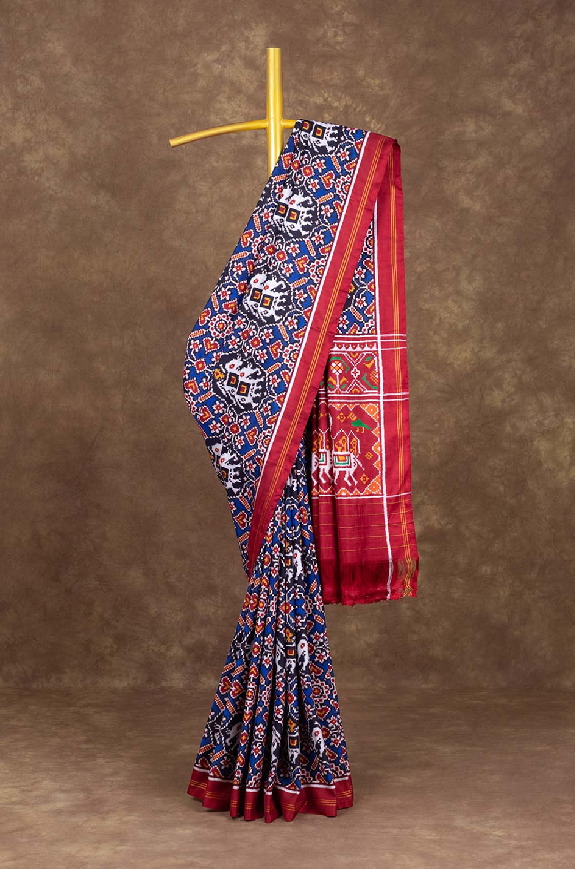
India’s rich textile heritage is celebrated around the world, and among its most treasured creations is the Patan Patola saree. Known for its extraordinary craftsmanship, vibrant colors, and intricate geometric patterns, the Patan Patola is more than just a piece of clothing—it is a symbol of tradition, luxury, and artistic excellence. Woven in the historic town of Patan in Gujarat, these sarees have been admired for centuries by royalty, collectors, and textile enthusiasts alike.
In an era of fast fashion, the Patan Patola saree stands as a remarkable example of slow, sustainable craftsmanship. Every saree is handmade with immense patience and precision, making it one of the finest and most exclusive handwoven textiles in the world.
History of Patan Patola Sarees
The history of Patan Patola dates back nearly 900 years. The craft was introduced to Patan by the Salvi weaving community, believed to have migrated from Maharashtra and Karnataka during the Solanki dynasty. The rulers of Gujarat patronized these skilled artisans, encouraging them to produce luxurious textiles for the royal family.
Over time, Patan Patola sarees became symbols of wealth and prestige. They were highly valued not only in India but also in Southeast Asian countries such as Indonesia, Thailand, and Malaysia through ancient trade routes. Today, Patan remains the only place where authentic double ikat Patola sarees are traditionally woven.
What Makes Patan Patola Unique?
The most distinctive feature of a Patan Patola saree is its double ikat weaving technique, one of the most challenging textile methods in the world.
In this process, both the warp (vertical threads) and weft (horizontal threads) are individually tied and dyed before weaving. Each thread is carefully colored according to the final design. During weaving, these dyed threads must align perfectly to create intricate patterns.
This extraordinary level of precision demands years of expertise and countless hours of labor. Even a minor error can disrupt the entire design, which is why authentic Patan Patola sarees are considered masterpieces of textile art.
The Traditional Weaving Process
Creating a Patan Patola saree involves multiple stages, each requiring exceptional skill.
1. Silk Selection
High-quality mulberry silk is chosen to ensure durability, softness, and a luxurious finish.
2. Designing
Artisans first prepare detailed pattern layouts. Since both warp and weft are dyed separately, every color placement must be planned in advance.
3. Tie and Dye
Thousands of tiny sections of silk threads are tightly tied with cotton thread to prevent dye penetration. The threads undergo multiple rounds of dyeing, starting from lighter shades to darker colors.
4. Weaving
Once dyeing is complete, the warp and weft threads are mounted on the loom. The artisan carefully aligns every thread so that the final pattern emerges with perfect symmetry.
5. Finishing
After weaving, the saree is inspected, washed, and polished to enhance its natural shine and texture.
Completing a single authentic Patan Patola saree may take anywhere from six months to over a year, depending on the complexity of the design.
Popular Patola Motifs
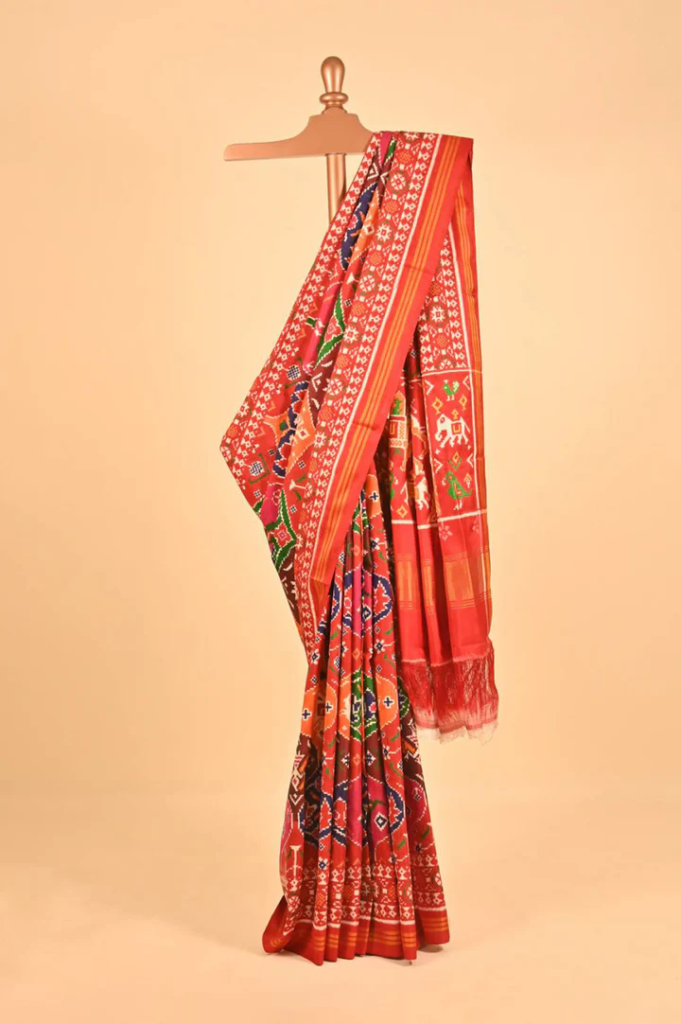
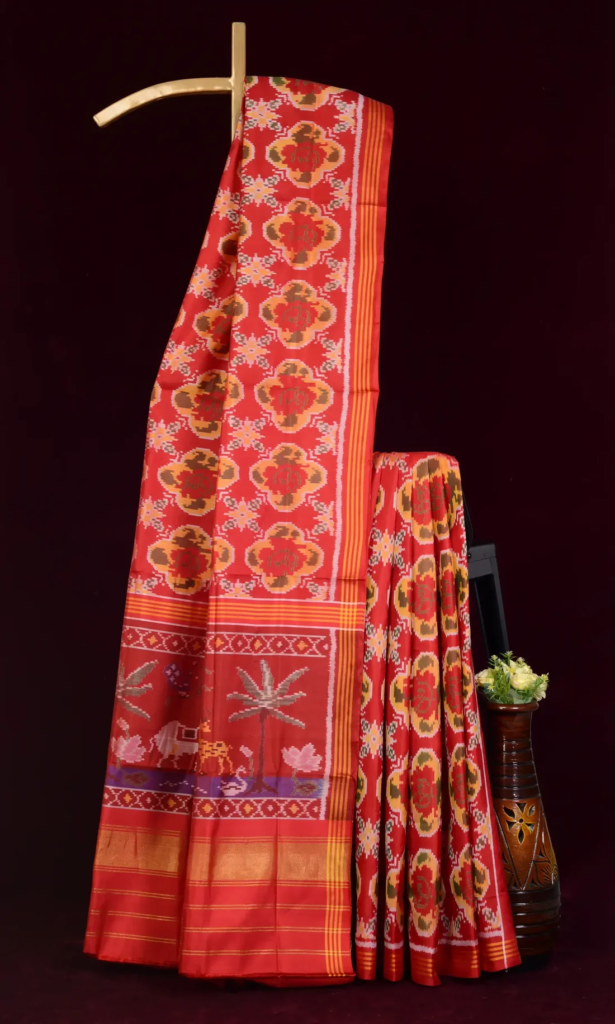
Patan Patola sarees are known for their vibrant motifs inspired by nature, spirituality, and traditional Indian art. Some of the most popular designs include:
- Elephant motifs symbolizing strength and prosperity
- Parrot designs representing love and happiness
- Dancing doll (Nari Kunjar) patterns
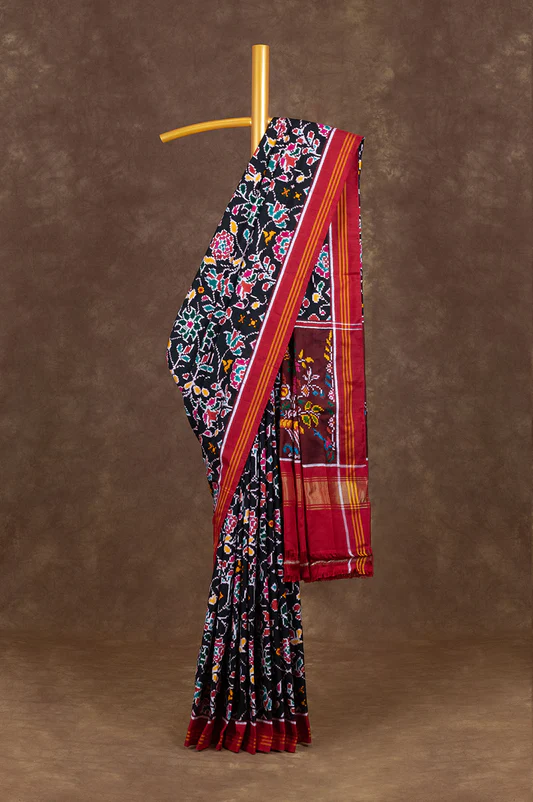
- Floral and lotus motifs
- Peacock designs reflecting grace and beauty
- Geometric diamonds and star-shaped patterns
- Basket and lattice-inspired designs
These motifs are often arranged in perfectly symmetrical layouts, showcasing the remarkable precision of double ikat weaving.
Natural Colors and Sustainable Craftsmanship
Traditionally, Patan Patola sarees were dyed using natural colors extracted from plants, roots, flowers, minerals, and vegetables. While some artisans now use high-quality synthetic dyes for consistency, many continue to preserve traditional dyeing methods.
Since every saree is handcrafted without mass-production machinery, Patan Patola weaving supports sustainable fashion by promoting:
- Handmade production
- Low environmental impact
- Long-lasting quality
- Preservation of traditional craftsmanship
- Support for local artisan communities
Owning a Patan Patola saree is often viewed as an investment in heritage rather than simply purchasing clothing.
Why Are Patan Patola Sarees Expensive?
The high price of authentic Patan Patola sarees reflects the immense skill, time, and effort involved in their creation.
Several factors contribute to their value:
- Double ikat weaving is extremely labor-intensive.
- Months of manual work are required for a single saree.
- Highly skilled artisans spend years mastering the craft.
- Premium silk and quality dyes increase production costs.
- Authentic Patan Patola sarees are produced in limited numbers.
As a result, genuine Patan Patola sarees are considered luxury handloom products and are often passed down through generations as family heirlooms.
How to Identify an Authentic Patan Patola Saree
Because of their popularity, many machine-made imitations are available in the market. Here are a few ways to recognize an authentic Patan Patola:
- The design appears identical on both sides of the saree.
- Patterns are perfectly aligned due to double ikat weaving.
- The fabric feels soft yet strong because of premium silk.
- The weaving displays exceptional precision with no printed effect.
- Authentic sarees are handcrafted by skilled Patan artisans and often carry certification or Geographical Indication (GI) recognition.
Buying from trusted handloom stores or directly from artisan families helps ensure authenticity.
Styling a Patan Patola Saree
A Patan Patola saree is versatile enough to be worn at weddings, festivals, cultural events, and formal celebrations.
For a traditional look, pair it with:
- Temple jewelry or antique gold jewelry
- A silk blouse in contrasting colors
- Classic bangles and earrings
- A neatly tied bun decorated with fresh flowers
For a contemporary appearance, minimalist accessories and modern blouse designs can beautifully complement the vibrant patterns without overshadowing the saree.
Preserving a Patan Patola Saree
Proper care helps maintain the beauty of this valuable textile for generations.
Some useful care tips include:
- Dry clean only.
- Store in a clean cotton or muslin cloth.
- Avoid prolonged exposure to direct sunlight.
- Refold the saree periodically to prevent permanent creases.
- Keep it away from moisture and harsh chemicals.
With proper maintenance, an authentic Patan Patola saree can remain beautiful for decades.
Cultural Importance
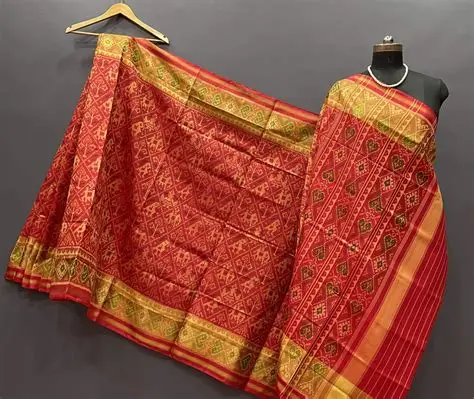
Beyond its visual appeal, the Patan Patola saree represents India’s rich weaving traditions and artistic excellence. It embodies generations of knowledge passed from master weavers to their descendants. Every saree tells a story of dedication, patience, and cultural identity.
Today, government initiatives, textile exhibitions, and handloom organizations continue to promote Patan Patola weaving, helping preserve this remarkable craft for future generations.
Conclusion
The Patan Patola saree is one of India’s most extraordinary textile traditions, celebrated for its unmatched craftsmanship, intricate double ikat technique, and timeless elegance. Every handmade saree reflects months of meticulous work and centuries of cultural heritage. Whether admired as a work of art, worn on special occasions, or treasured as a family heirloom, a Patan Patola saree remains a symbol of luxury, tradition, and enduring craftsmanship.
Choosing an authentic Patan Patola is not merely buying a saree—it is supporting skilled artisans, preserving a centuries-old weaving tradition, and celebrating one of India’s finest contributions to the world of handloom textiles.