
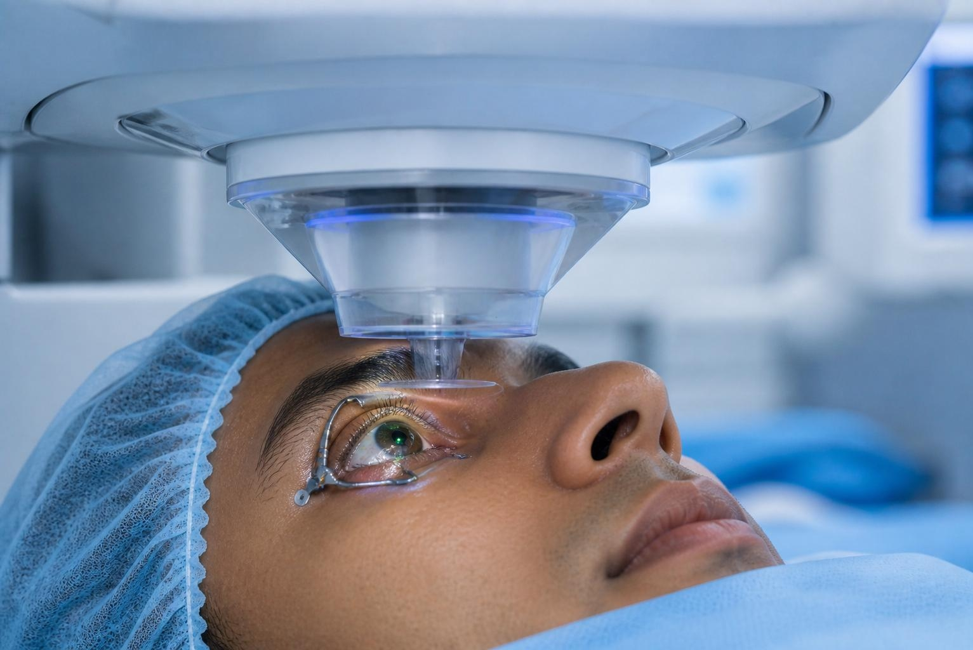
Choosing an artificial lens is one of the more personal decisions in eye care. Each lens type shapes how sharply you see at different distances, and no single option suits every lifestyle. When you consider your own habits ahead of time, the results often feel more satisfying and more predictable.
A thoughtful conversation with your surgeon helps align the lens with what you hope to see clearly each day. That discussion is most useful well before cataract surgery is scheduled.
Lens Options and Visual Outcomes
Intraocular lenses are grouped by how they focus light. During cataract surgery, ultrasound energy breaks up the clouded natural lens through a small incision, and the new implant takes its place. The lens you select largely determines how much you rely on glasses later.
The table below compares five common lens categories and what each typically offers:
| Lens name | Focus range | Typical glasses use | Main consideration |
| Monofocal Intraocular Lens | One chosen distance, usually far | Reading glasses usually needed | Sharp, high-contrast vision, but near and intermediate tasks depend on glasses |
| Toric Intraocular Lens | One chosen distance, with astigmatism correction | Reading glasses usually needed | Reduces blur from astigmatism but must sit in the correct rotation |
| Extended Depth of Focus Intraocular Lens | Far and intermediate, with some near | Glasses may help with small print | Mild halos can appear around lights at night |
| Multifocal Intraocular Lens | Far, intermediate and near | Occasional use | Glare and reduced contrast in dim light are more likely |
| Accommodating Intraocular Lens | Far and intermediate, with limited near | Often needed for close reading | Near focus varies from person to person |
Driving and Night Vision
Driving after dark needs particular attention, so these points are worth raising with your surgeon before cataract or phaco surgery:
- How comfortable you feel driving at night
- Your tolerance for halos or glare around oncoming headlights
- Any long highway or professional driving you do
- Conditions such as glaucoma, macular degeneration or dry eye
- Local licensing standards for vision
Planning Daily Life After Cataract Surgery
Computer work, cooking, gardening, golf and swimming each place different demands on your focus. Sharing these routines helps your surgeon match a lens to your goals before cataract surgery. Listing your most frequent activities and the distance at which you perform each gives your surgeon a practical basis for recommending a lens.
Recovery after cataract or phaco surgery is usually quick, and many people notice clearer vision within days, though full stabilisation can take several weeks. Ask about eye drops, activity limits, follow-up visits and when you can receive new glasses.
Final Thoughts
Selecting an intraocular lens involves a close look at your reading habits, driving needs, hobbies and daily routines. Each option carries trade-offs between independence from glasses and visual quality in dim light. Before choosing any treatment options, ask your doctor about the most suitable options and how long the treatment may take. Thoughtful preparation before cataract surgery and attention to follow-up care both contribute to the most appropriate result.
References
- https://www.aao.org/eye-health/tips-prevention/best-artificial-lens-implant-iol-cataract-surgery
- https://gei.co.in/blog/types-of-lenses-for-cataract-surgery/
- https://saijyothieyehospital.com/blog/phaco-cataract-surgery/
- https://www.mayoclinic.org/tests-procedures/cataract-surgery/about/pac-20384765
Disclaimer: This article is for general information only and should not be considered medical advice. Consult a qualified eye specialist before making decisions about cataract surgery or lens options.