Introduction
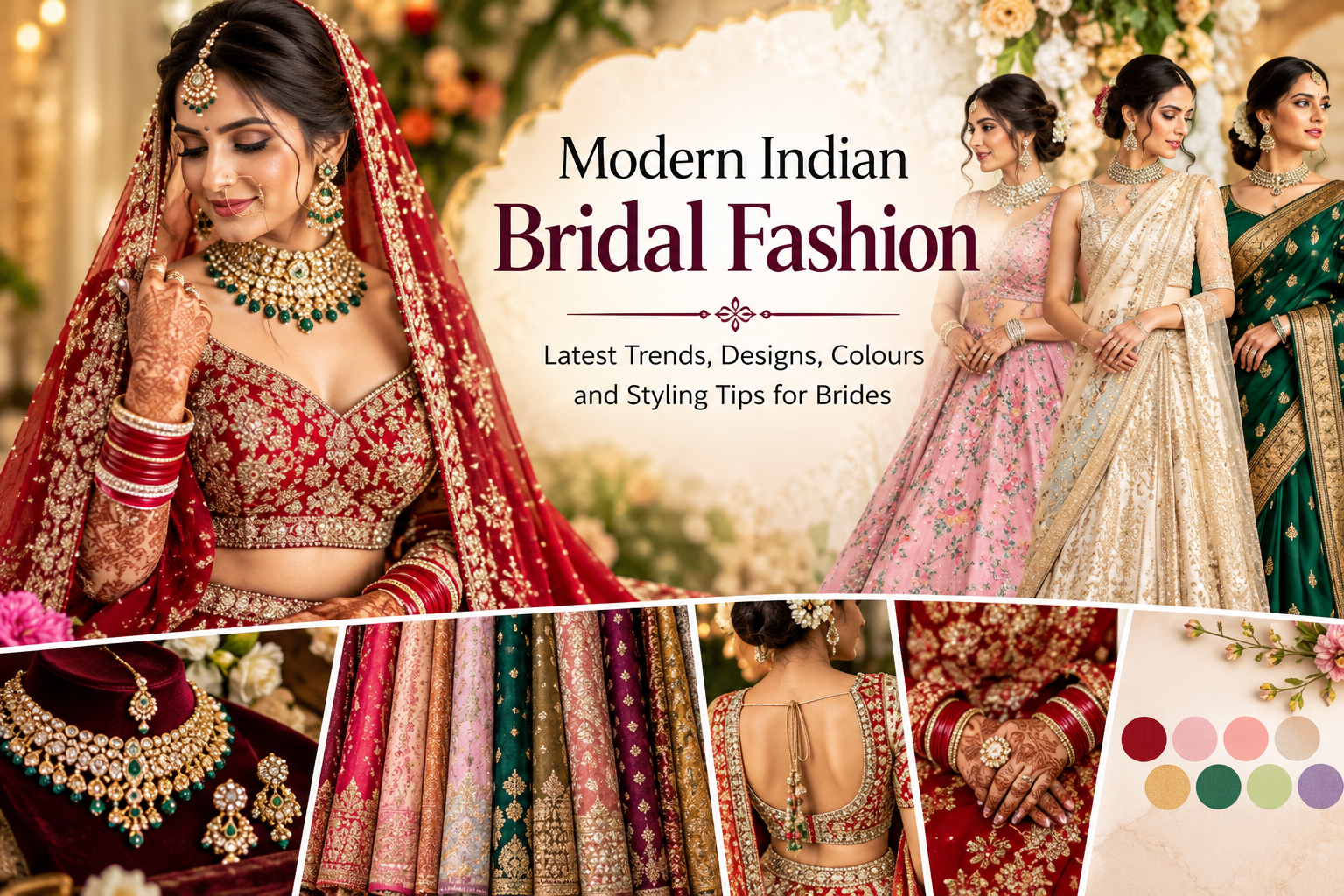
Modern Indian bridal fashion beautifully combines traditional culture with contemporary style. Indian weddings are known for their colourful celebrations, beautiful outfits, intricate embroidery and meaningful customs. Today, brides are exploring new ways to express their personalities while preserving the traditions that make their wedding day special. From classic red lehengas to pastel bridal gowns, modern Indian bridal fashion offers countless choices for every taste and budget.
Many brides now prefer outfits that look elegant, feel comfortable and photograph beautifully. Some choose traditional bridal wear inspired by their regional culture, while others experiment with minimalist designs, unconventional colours and modern silhouettes. Whether planning a grand wedding or an intimate ceremony, understanding the latest bridal fashion trends can help brides create a memorable wedding look.
1. Traditional Bridal Lehengas with a Modern Touch

Bridal lehengas remain one of the most popular choices for Indian weddings. They are admired for their rich embroidery, flowing skirts and royal appearance. However, modern designers are introducing fresh details that make traditional lehengas more versatile and fashionable.
Popular designs include heavily embroidered velvet lehengas, silk bridal skirts, delicate zari work and outfits decorated with sequins, pearls and crystals. Brides can also choose lighter lehengas with floral embroidery for daytime ceremonies.
Contemporary styling options include modern blouse designs, sweetheart necklines, cape sleeves, statement backs and detachable dupattas. These details help create a distinctive bridal look without losing the traditional charm of Indian wedding attire.
Brides who prefer a personalised outfit can select customised embroidery, meaningful motifs or patterns inspired by their family traditions.
2. Trending Bridal Colours Beyond Traditional Red

Red has long been associated with Indian bridal fashion because it represents love, prosperity and auspicious beginnings in many wedding traditions. Although red remains a favourite, modern brides are experimenting with a wider colour palette.
Some popular bridal colours include:
- Pastel pink: Ideal for romantic and delicate bridal looks.
- Ivory and champagne: Suitable for understated, sophisticated styling.
- Wine and maroon: Rich shades that create a dramatic appearance.
- Emerald green: A luxurious choice for traditional ceremonies.
- Peach and blush: Beautiful options for daytime weddings.
- Gold and antique gold: Classic colours that complement traditional jewellery.
- Lavender and dusty rose: Attractive choices for brides seeking something different.
The best colour depends on personal preference, wedding traditions, venue lighting and the overall theme. Brides should also consider how the outfit complements their jewellery, makeup and wedding photography.
3. Elegant Sarees for Modern Indian Brides

Sarees continue to hold a special place in Indian bridal fashion. They are particularly popular among brides who want to celebrate their regional heritage while maintaining a graceful appearance.
Banarasi silk sarees are admired for their detailed brocade work, while Kanjeevaram sarees are known for their rich silk fabric and contrasting borders. Paithani, Patola, Bandhani and other regional styles also offer distinctive options for wedding ceremonies.
Modern bridal sarees often feature contemporary blouse designs, structured shoulders, statement sleeves and carefully selected accessories. Pre-draped sarees can be a practical alternative for brides who want the traditional appearance without spending too much time arranging pleats.
A well-chosen saree can look beautiful at the wedding ceremony, reception or other important celebrations.
4. Minimalist Bridal Fashion Is Gaining Attention
Not every bride wants a heavily embellished outfit. Minimalist bridal fashion offers a sophisticated alternative through clean silhouettes, quality fabrics and carefully selected details.
Light embroidery, subtle shimmer, monochromatic outfits and simple jewellery can create an elegant appearance. Brides may choose a lightweight silk lehenga, an embroidered saree or a contemporary bridal suit.
Minimalist fashion can also be practical for smaller weddings, destination ceremonies and intimate celebrations. Lighter outfits are often easier to move in, allowing brides to enjoy their special day with greater comfort.
The key to minimalist bridal styling is balance. A simple outfit can look striking when paired with a well-fitted blouse, beautiful fabric and thoughtfully chosen accessories.
5. Contemporary Blouse Designs and Dupatta Styling
Blouses and dupattas can completely transform a bridal outfit. Modern Indian bridal fashion offers many design possibilities, allowing brides to customise traditional clothing according to their preferences.
Popular blouse styles include high-neck designs, full sleeves, sweetheart necklines, corset-inspired shapes and embroidered back patterns. Some brides choose contrasting blouse colours to create visual interest, while others prefer matching fabrics for a coordinated look.
Dupatta styling is equally important. A bride may drape one dupatta over her head and another across the shoulder for a traditional appearance. Alternatively, a single lightweight dupatta can create a cleaner, more contemporary silhouette.
The final choice should complement the outfit, jewellery and ceremony while allowing comfortable movement.
6. Bridal Jewellery That Complements the Outfit

Jewellery plays an essential role in completing an Indian bridal look. Traditional options include kundan, polki, temple jewellery, gold necklaces, bangles, maang tikkas and elaborate earrings.
Modern brides are increasingly considering the neckline, embroidery and colour of their outfits before selecting accessories. A heavily embroidered lehenga may pair well with carefully balanced jewellery, while a simple outfit can accommodate a bold necklace or statement earrings.
Some brides also incorporate family heirlooms into their wedding ensembles. These pieces can add emotional significance and create a connection between generations.
Comfort should remain a priority. Brides should ensure that necklaces, earrings and headpieces fit securely and do not become uncomfortable during long ceremonies.
7. Sustainable and Budget-Friendly Bridal Fashion
Modern bridal fashion is not only about luxury. Many brides are looking for ways to create beautiful wedding outfits while managing expenses and reducing unnecessary waste.
One option is to rent designer clothing for a single event. Another is to purchase an outfit that can be restyled for future celebrations. A bridal lehenga, for example, may be paired with a different blouse or dupatta for another occasion.
Supporting local artisans and traditional textile producers can also help preserve Indian craftsmanship. Handwoven fabrics, regional embroidery and handcrafted accessories often bring distinctive character to bridal clothing.
To manage the budget, brides should compare fabrics, embroidery quality, tailoring costs and alteration charges before making a purchase.
8. Tips for Choosing the Perfect Bridal Outfit
Selecting a wedding outfit requires planning because bridal clothing often involves several fittings and custom details.
Here are some useful tips:
- Start early: Begin exploring outfits several months before the wedding to allow time for tailoring and alterations.
- Set a realistic budget: Include the outfit, blouse, dupatta, jewellery and alterations.
- Prioritise comfort: Choose breathable fabrics and a fit that allows you to sit, walk and dance comfortably.
- Consider the ceremony: Different outfits may suit a traditional wedding, reception, engagement or destination celebration.
- Try different styles: Experiment with colours, silhouettes and blouse designs before making a final decision.
- Coordinate accessories: Choose jewellery, footwear and makeup that complement the complete look.
- Check the finishing: Inspect stitching, embroidery, lining and closures before accepting the final outfit.
The most successful bridal look is one that reflects the bride’s personality rather than simply following every fashion trend.
Conclusion
Modern Indian bridal fashion celebrates the beauty of tradition while embracing creativity, comfort and individual expression. From embroidered lehengas and luxurious silk sarees to pastel outfits and minimalist ensembles, today’s brides have more choices than ever before.
The ideal bridal outfit does not have to be the most expensive or heavily decorated design. It should reflect personal style, respect the significance of the occasion and allow the bride to feel confident throughout the celebration.
By selecting suitable colours, comfortable fabrics, complementary jewellery and thoughtful styling details, every bride can create a memorable wedding appearance. Ultimately, modern Indian bridal fashion is about finding the perfect balance between cultural heritage and contemporary elegance.