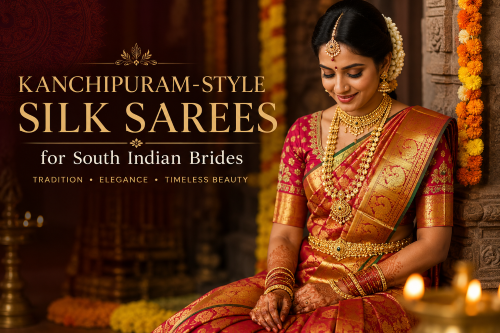
A wedding is one of the most cherished milestones in a woman’s life, and every bride dreams of wearing an outfit that reflects tradition, elegance, and timeless beauty. Among the many bridal ensembles available in India, Kanchipuram-style silk sarees remain one of the most treasured choices for South Indian brides. Known for their luxurious silk, intricate zari work, and rich cultural heritage, these sarees have been a symbol of grace and prosperity for generations.
Whether you’re planning your wedding or simply exploring traditional Indian bridal fashion, this guide covers everything you need to know about Kanchipuram-style silk sarees.
What Are Kanchipuram-Style Silk Sarees?
Kanchipuram-style silk sarees are inspired by the weaving traditions of Kanchipuram, a historic temple town in Tamil Nadu. These sarees are crafted using high-quality mulberry silk and are known for their durability, vibrant colors, and elaborate gold or silver zari designs.
Traditional motifs often feature elements inspired by South Indian temples, nature, mythology, and royal art. The sarees are prized not only for their beauty but also for the skilled craftsmanship involved in their creation.
Why South Indian Brides Prefer Kanchipuram-Style Silk Sarees
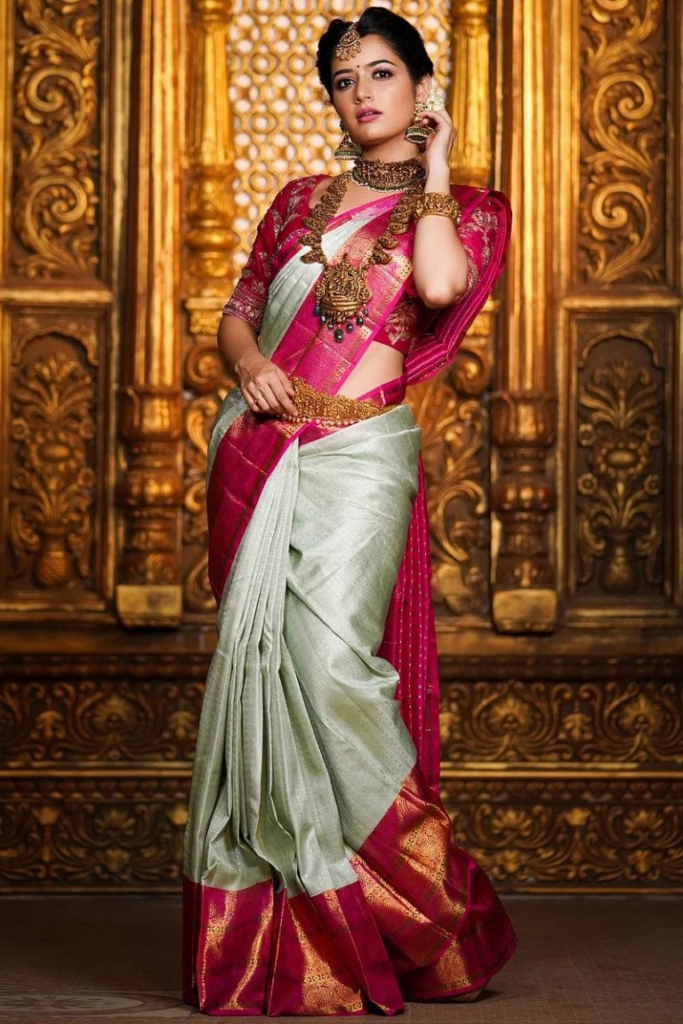
For generations, Kanchipuram-style silk sarees have been associated with weddings and auspicious occasions. They are often passed down as family heirlooms, carrying emotional and cultural significance.
Some reasons brides continue to choose these sarees include:
- Timeless elegance
- Rich silk fabric with luxurious texture
- Intricate handcrafted designs
- Symbol of prosperity and tradition
- Long-lasting quality
- Suitable for traditional wedding ceremonies
Unlike many modern fashion trends that come and go, these sarees never lose their appeal.
Unique Features of Kanchipuram-Style Silk Sarees
Premium Silk Fabric
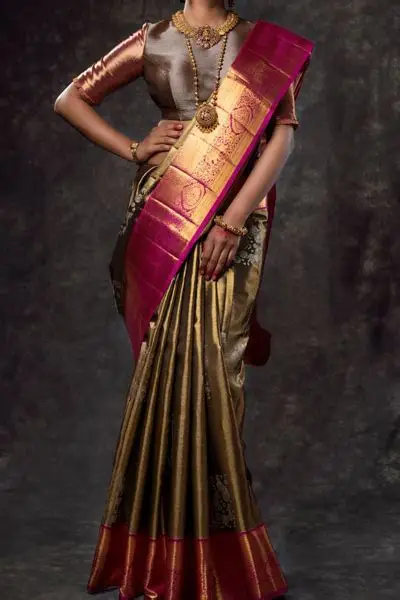
The hallmark of a Kanchipuram-style saree is its rich silk. The fabric has a natural sheen that enhances the bride’s overall appearance while remaining comfortable enough for long wedding ceremonies.
Contrasting Borders
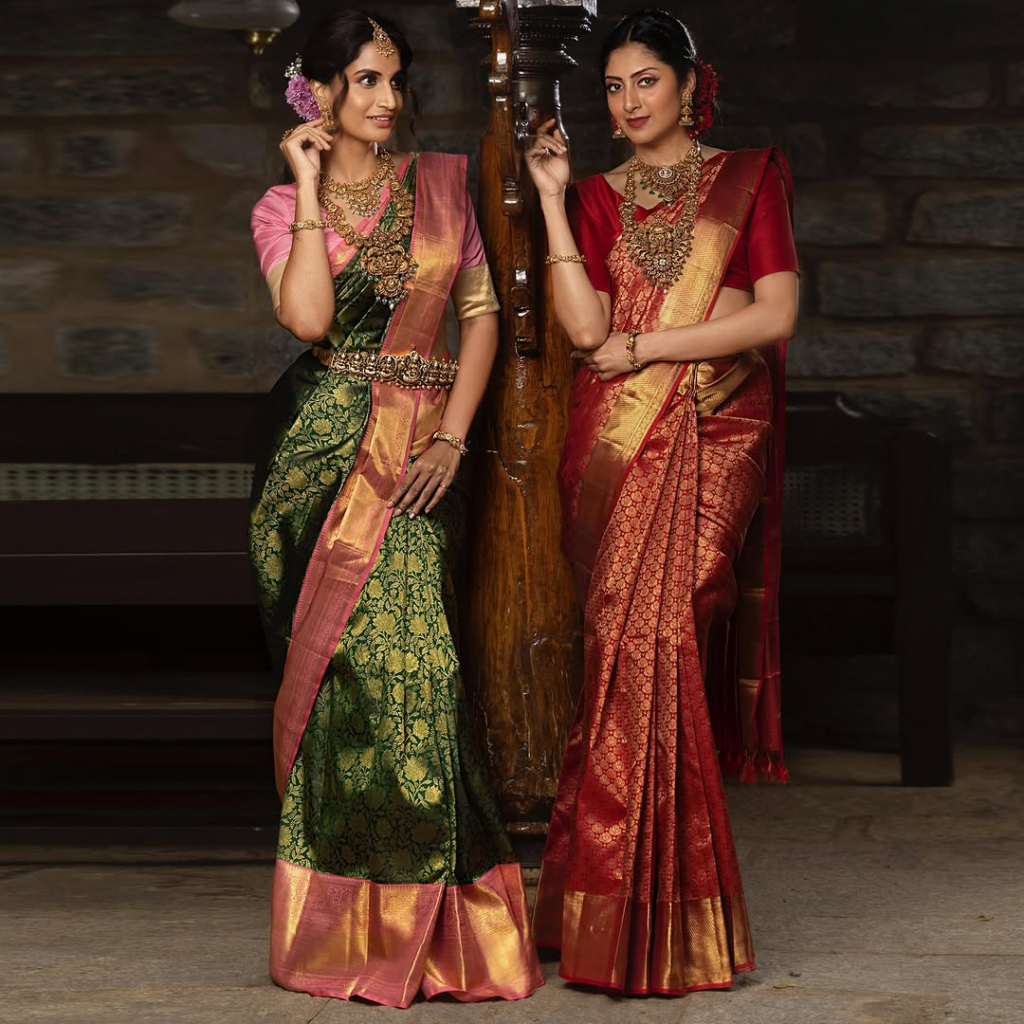
One of the most recognizable features is the contrasting border. Bright combinations like maroon with mustard, royal blue with pink, or emerald green with gold create a striking visual effect.
Rich Zari Work
Traditional zari weaving uses metallic threads to create elaborate borders and pallu designs. Common patterns include:
- Temple borders
- Floral vines
- Mango motifs
- Peacock designs
- Lotus patterns
- Checks and stripes
These timeless motifs give the saree its regal appearance.
Heavy Pallu
The pallu is often the highlight of the saree, featuring elaborate woven artwork that complements the border and body.
Popular Bridal Colors
While personal preference plays a major role, some colors remain classic choices for South Indian weddings.
Red
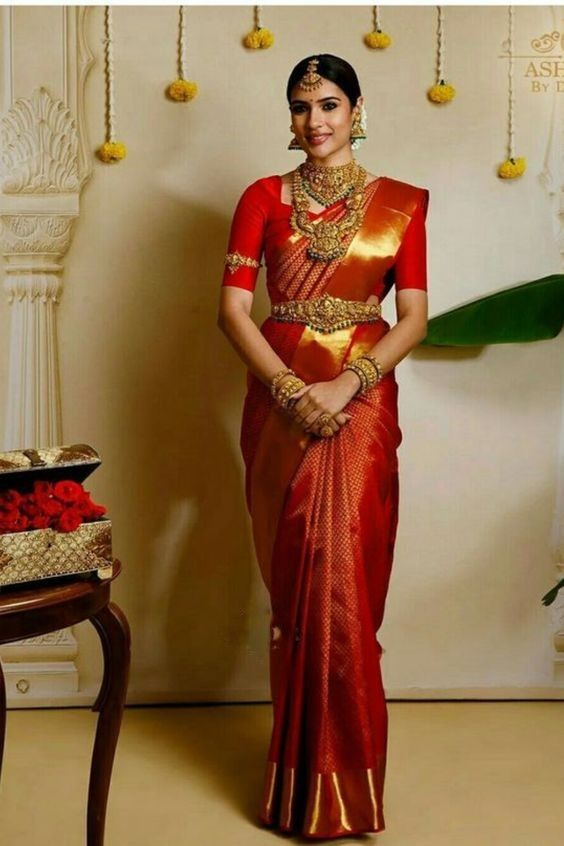
A timeless bridal favorite symbolizing love, prosperity, and celebration.
Maroon
Deep maroon offers a royal and sophisticated appearance while complementing traditional gold jewelry beautifully.
Mustard Gold
A classic South Indian bridal shade associated with auspicious beginnings.
Emerald Green
Green represents growth, harmony, and prosperity, making it a popular choice for wedding rituals.
Royal Blue
Royal blue creates a striking contrast with gold zari and suits brides seeking a bold yet traditional look.
Pink
Soft pink shades have become increasingly popular among modern brides who prefer a subtle, elegant style.
Traditional Motifs and Their Meaning
Many motifs woven into Kanchipuram-style silk sarees carry symbolic significance.
Peacock
Represents beauty, grace, and prosperity.
Mango (Paisley)
Symbolizes fertility and abundance.
Lotus
Associated with purity, divinity, and spiritual growth.
Temple Borders
Inspired by South Indian temple architecture, these designs represent cultural heritage and devotion.
Elephant
Signifies wisdom, strength, and good fortune.
These meaningful motifs add cultural depth to the bridal attire.
Choosing the Right Saree for Your Wedding
Consider the Wedding Ceremony
Morning weddings often feature brighter shades like yellow, green, or gold, while evening ceremonies suit richer tones such as maroon, crimson, or navy blue.
Select Comfortable Silk
Since wedding ceremonies can last several hours, choose a saree that offers both elegance and comfort.
Match the Jewelry
Traditional South Indian bridal jewelry pairs beautifully with sarees featuring gold zari. Coordinate your necklace, waist belt, earrings, and bangles with the saree’s design.
Check the Border Width
Wider borders create a grand bridal appearance, while narrower borders offer a more understated elegance.
Focus on Authentic Weaving
Examine the weave quality, finishing, and detailing to ensure you’re investing in a well-crafted saree.
Styling Tips for South Indian Brides
Your bridal look extends beyond the saree itself.
Some timeless styling ideas include:
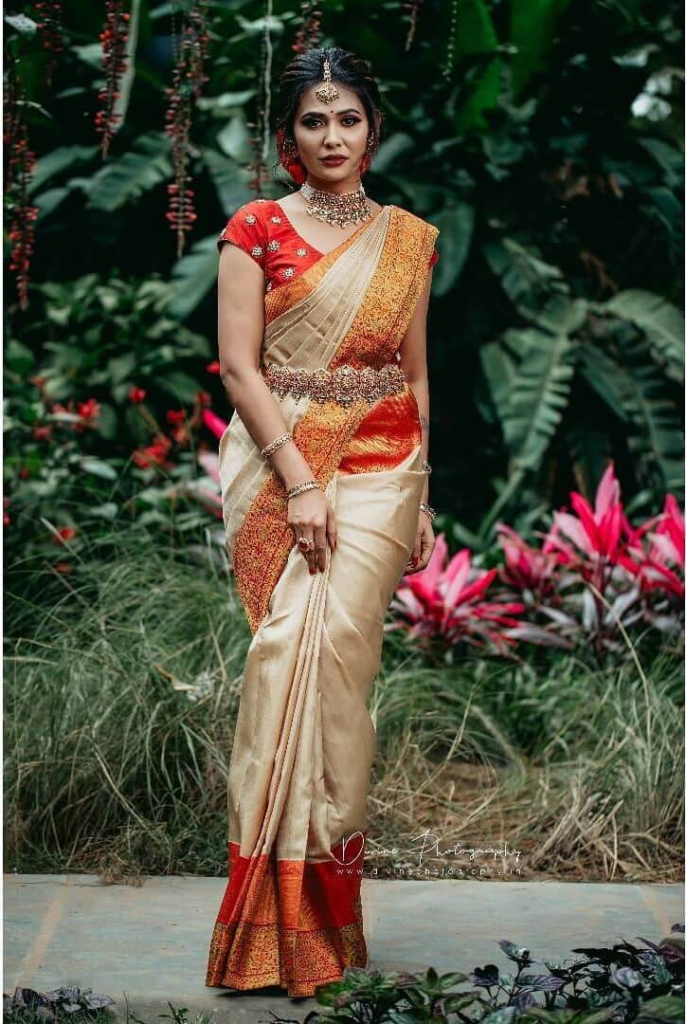
- Wear a traditional blouse with embroidered sleeves.
- Style your hair in a long braid decorated with jasmine flowers.
- Add a classic gold waist belt for a regal finish.
- Choose temple jewelry to complement the saree.
- Wear matching bangles and traditional earrings.
- Complete the look with a small bindi and subtle bridal makeup.
These details enhance the beauty of the saree without overpowering it.
Caring for Your Silk Saree
Proper maintenance ensures your saree remains beautiful for years.
Follow these care tips:
- Dry clean after every use.
- Store in a cotton or muslin cloth.
- Avoid direct sunlight for extended periods.
- Refold the saree every few months to prevent permanent creases.
- Keep it away from moisture and perfumes.
- Air it occasionally to maintain freshness.
With proper care, a quality silk saree can become a treasured family heirloom.
Modern Trends in Kanchipuram-Style Bridal Sarees
While traditional craftsmanship remains unchanged, designers are introducing contemporary variations that appeal to modern brides.
Popular trends include:
- Lightweight silk weaves
- Pastel bridal shades
- Minimal zari designs
- Contemporary geometric motifs
- Dual-tone silk combinations
- Customized blouse embroidery
These modern updates allow brides to embrace tradition while expressing their personal style.
How to Identify a Quality Silk Saree
When purchasing a bridal saree, pay attention to:
- Smooth, tightly woven silk fabric
- Even and detailed zari work
- Strong stitching between the body and border
- Rich color consistency
- Soft texture with natural shine
- Neat finishing along the edges
Buying from trusted retailers or reputed handloom stores can help ensure quality and authenticity.
Conclusion
Kanchipuram-style silk sarees continue to be one of the most elegant and meaningful choices for South Indian brides. Their rich silk fabric, intricate craftsmanship, vibrant colors, and cultural significance make them much more than wedding attire—they become cherished memories that can be preserved for generations.
Whether you prefer a classic red bridal saree with traditional temple motifs or a modern pastel silk weave with subtle zari, there is a Kanchipuram-style saree to suit every bride’s personality. By selecting the right color, weave, and accessories, you can create a bridal look that beautifully balances heritage with contemporary elegance.
For many families, these sarees represent not just fashion but tradition, celebration, and the beginning of a new chapter. Investing in a well-crafted Kanchipuram-style silk saree ensures that your wedding ensemble remains as timeless as the memories created on your special day.