
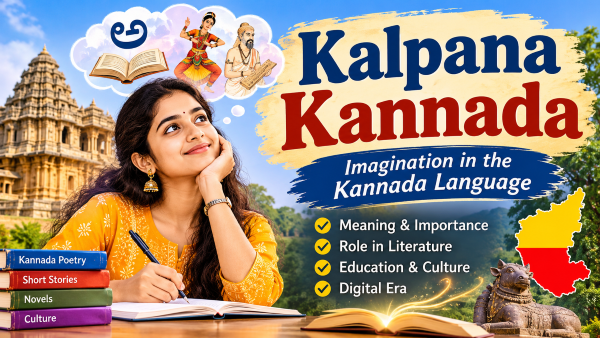
Kalpana Kannada is a phrase that can be understood in different ways depending on the context. In Kannada, the word “Kalpana” (ಕಲ್ಪನಾ) generally refers to imagination, creativity, or the ability to form ideas and mental pictures. Kannada, one of India’s major classical languages, has a rich literary tradition in which imagination plays an important role.
From poetry and stories to cinema, education, art, and everyday communication, Kalpana represents the creative side of Kannada expression. This article explains the meaning of Kalpana Kannada, its importance, and how imagination contributes to Kannada literature and culture.
What Does Kalpana Kannada Mean?
The Kannada word ಕಲ್ಪನಾ (Kalpana) commonly means imagination, conception, idea, or creative thought. When combined with Kannada, the expression can refer broadly to imaginative or creative expression through the Kannada language.
Imagination allows people to create ideas beyond what they directly see or experience. A writer can imagine a fictional character, a poet can describe an emotional world, and an artist can turn an abstract thought into a visual creation.
Therefore, Kalpana Kannada can be viewed as the creative use of Kannada to communicate thoughts, emotions, stories, and ideas.
Kannada and the Power of Imagination
Kannada has a literary history spanning many centuries. Its writers and poets have used the language to explore human emotions, nature, spirituality, social issues, relationships, and everyday life.
Imagination is an important part of this tradition. A simple experience can become a powerful literary work when a writer adds creativity and emotional depth.
For example, a writer may describe rain not only as a natural event but also as a symbol of memories, happiness, loneliness, or change. This transformation of ordinary experiences into meaningful expressions is one of the strengths of creative Kannada writing.
Kalpana in Kannada Literature
Kannada literature includes poetry, novels, short stories, plays, essays, biographies, and other forms of writing. In many of these forms, imagination helps authors create memorable characters and situations.
Poetry
Poetry provides considerable freedom for imagination. Kannada poets have traditionally used nature, seasons, flowers, rivers, mountains, relationships, and spiritual themes as sources of inspiration.
Through metaphors and symbolic language, poets can express feelings that may be difficult to explain through ordinary conversation.
Short Stories
Short-story writers use imagination to create characters and situations within a limited space. A fictional story may focus on family relationships, village life, urban experiences, social changes, or personal struggles.
Creative storytelling helps readers connect with characters and understand different perspectives.
Novels
Novels offer an even larger space for imagination. Authors can develop multiple characters, locations, conflicts, and storylines.
A well-written Kannada novel can transport readers into another period, community, or fictional world while also presenting ideas about society and human nature.
Kalpana Kannada in Education
Imagination is also important in education. Students learning Kannada can develop language skills through creative activities such as essay writing, storytelling, poetry, dialogue writing, and descriptive exercises.
Instead of simply memorizing grammar rules, students can be encouraged to create their own sentences and stories.
For example, a teacher might ask students to write about:
- A journey to an imaginary place
- A conversation between two animals
- A day without electricity
- Their dream village
- A fictional conversation with a historical character
Such activities can improve vocabulary, writing ability, confidence, and creative thinking.
Importance of Creative Kannada Writing
Creative writing helps preserve and develop a language. When people write new stories, poems, articles, and other forms of content in Kannada, they contribute to the continuing growth of the language.
Modern writers also combine traditional Kannada expressions with contemporary subjects. Technology, social media, education, careers, environmental issues, and modern lifestyles are increasingly becoming topics for Kannada content.
This shows that Kannada can adapt to changing times while maintaining its cultural identity.
Kalpana Kannada and Digital Content
The internet has created new opportunities for Kannada writers and readers. Websites, blogs, social media platforms, digital magazines, and video platforms allow Kannada content to reach audiences beyond traditional publishing.
People can now create Kannada articles, stories, poems, educational materials, podcasts, and videos from almost anywhere.
Digital platforms have also made it easier for younger generations to experiment with Kannada. They may use Kannada script, transliteration, or a combination of Kannada and English depending on their audience and purpose.
This growing digital presence can help introduce Kannada literature and creative expression to new readers.
Role of Imagination in Kannada Culture
Language is closely connected with culture. Kannada provides a way for people to express traditions, festivals, food, relationships, beliefs, history, and regional experiences.
Imagination helps transform these cultural elements into stories and artistic expressions.
A traditional festival, for example, can become the subject of a poem, short story, painting, song, or digital presentation. In this way, creative expression can help younger generations learn about cultural traditions in engaging formats.
Kalpana Kannada in Everyday Life
Imagination is not limited to professional writers or artists. Ordinary communication also involves creativity.
People may create humorous messages, write personal notes, tell stories to children, compose poems for special occasions, or describe their experiences creatively.
Kannada’s wide vocabulary and expressive style provide many possibilities for such communication.
Creative Kannada can therefore be found not only in books but also in conversations, social media posts, school activities, cultural programs, and family occasions.
How to Improve Kalpana Kannada Skills
Anyone interested in improving creative Kannada writing can begin with simple habits.
Read regularly: Reading Kannada stories, poems, newspapers, and other content introduces new vocabulary and writing styles.
Write every day: Even a short paragraph can help develop writing confidence.
Observe everyday life: People, places, nature, conversations, and experiences can all become sources of ideas.
Learn new words: A broader vocabulary makes it easier to express thoughts precisely.
Experiment with formats: Try poems, stories, essays, dialogues, and descriptions instead of following only one style.
Revise your writing: Editing helps remove unnecessary words and makes ideas clearer.
Conclusion
Kalpana Kannada represents the connection between imagination and the Kannada language. Whether it appears in poetry, literature, education, storytelling, culture, or digital media, creative thinking gives language greater depth and expression.
Kannada has continued to evolve through generations of writers, readers, teachers, artists, and everyday speakers. Encouraging imaginative Kannada writing can help preserve the richness of the language while making it relevant to modern audiences.
For students, writers, content creators, and Kannada enthusiasts, developing imagination alongside language skills can open new possibilities for storytelling and communication. In this sense, Kalpana Kannada is more than a phrase—it reflects the creative potential of expressing ideas and experiences through one of India’s rich literary languages.