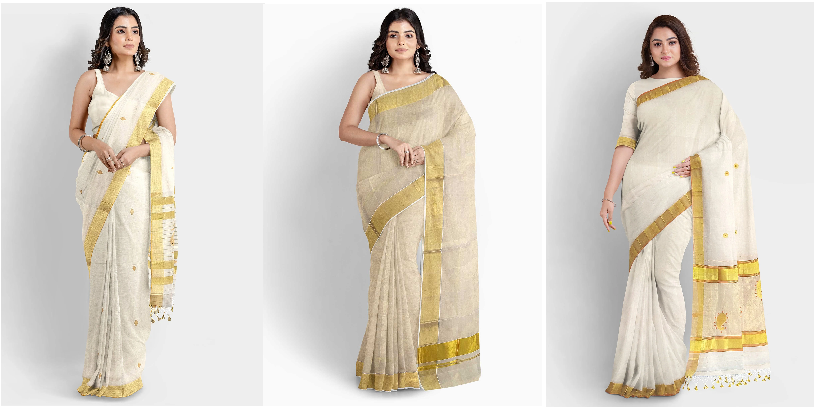
A wedding is one of the most cherished occasions in a person’s life, and every bride wants to look graceful while honoring her cultural heritage. In South India, the Kasavu saree has remained a timeless bridal choice for generations. Known for its elegant off-white fabric and shimmering golden border, the Kasavu saree reflects simplicity, sophistication, and tradition.
While fashion trends continue to evolve, Kasavu sarees have retained their charm because of their rich history, comfortable fabric, and versatile styling options. Whether worn during the wedding ceremony or for pre-wedding rituals, these sarees create a classic bridal look that never goes out of style.
What Is a Kasavu Saree?
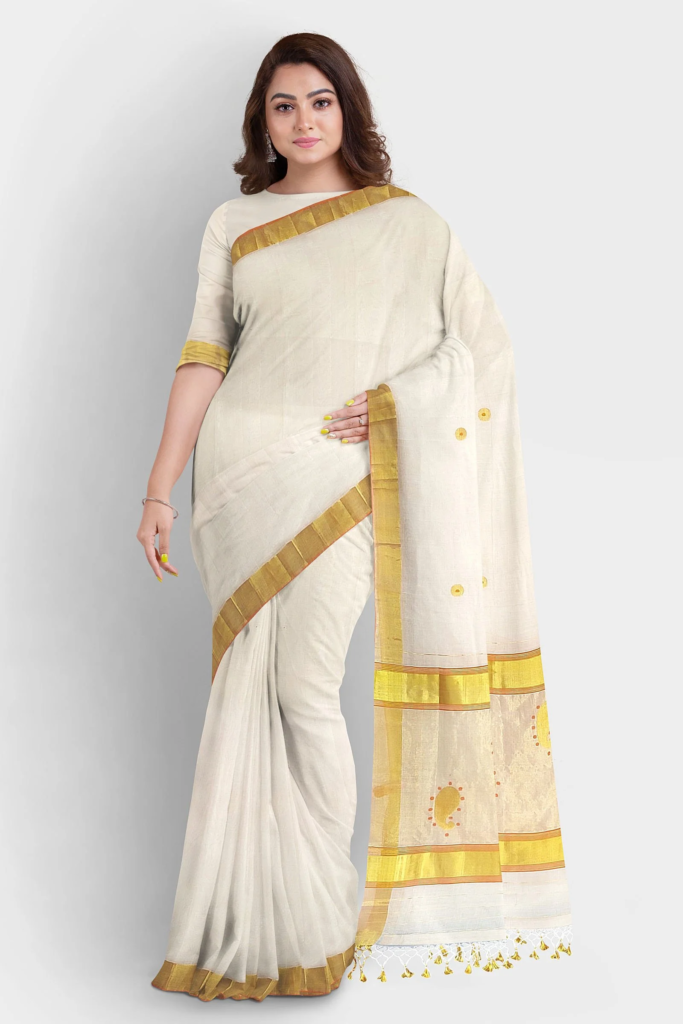
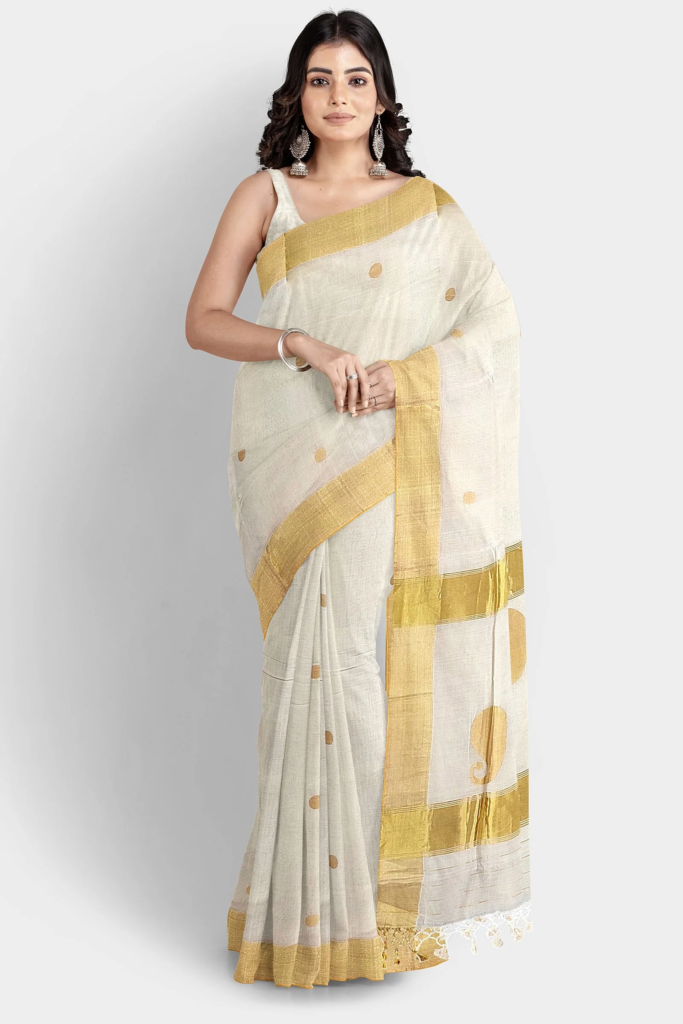
A Kasavu saree is a traditional handwoven saree originating from Kerala. It is characterized by its ivory or cream-colored body paired with a distinctive golden border called “Kasavu.” Traditionally, the golden border was woven using real gold threads, though modern versions commonly use gold-colored zari.
Kasavu sarees are woven primarily from fine cotton, making them lightweight and comfortable. Today, silk blends are also popular among brides who want a richer appearance while maintaining the classic design.
The simplicity of the Kasavu saree highlights the beauty of traditional craftsmanship and makes it one of the most iconic bridal outfits in South India.
Cultural Importance of Kasavu Sarees
Kasavu sarees have been an integral part of Kerala’s cultural heritage for centuries. They symbolize purity, prosperity, and auspicious beginnings, making them especially suitable for weddings and religious ceremonies.
South Indian brides often wear Kasavu sarees during:
- Wedding ceremonies
- Engagement functions
- Temple weddings
- Traditional rituals
- Festivals such as Onam and Vishu
- Family celebrations
The elegant appearance of the Kasavu saree represents grace without excessive embellishment, reflecting the values of simplicity and dignity.
Why South Indian Brides Love Kasavu Sarees
Timeless Beauty
Unlike heavily embroidered bridal outfits that may follow seasonal trends, Kasavu sarees remain fashionable year after year. Their classic appearance never feels outdated.
Comfortable to Wear
Traditional weddings often involve lengthy ceremonies. Cotton and silk Kasavu sarees are breathable and comfortable, making them ideal for long hours of wear.
Rich Cultural Heritage
Many brides choose Kasavu sarees to honor family traditions and preserve their cultural identity during one of life’s most meaningful events.
Elegant Yet Minimal
The beauty of a Kasavu saree lies in its understated elegance. The ivory fabric and golden border create a luxurious appearance without overwhelming the bride’s natural beauty.
Types of Kasavu Sarees for Brides
Traditional Cotton Kasavu Saree
This is the classic version woven with fine cotton and golden zari borders. It is lightweight, breathable, and ideal for daytime ceremonies.
Silk Kasavu Saree
Silk Kasavu sarees add richness and shine, making them perfect for grand weddings. They drape beautifully and pair well with elaborate bridal jewelry.
Tissue Kasavu Saree
These sarees feature shimmering fabrics that create a luxurious look while maintaining traditional aesthetics.
Designer Kasavu Saree
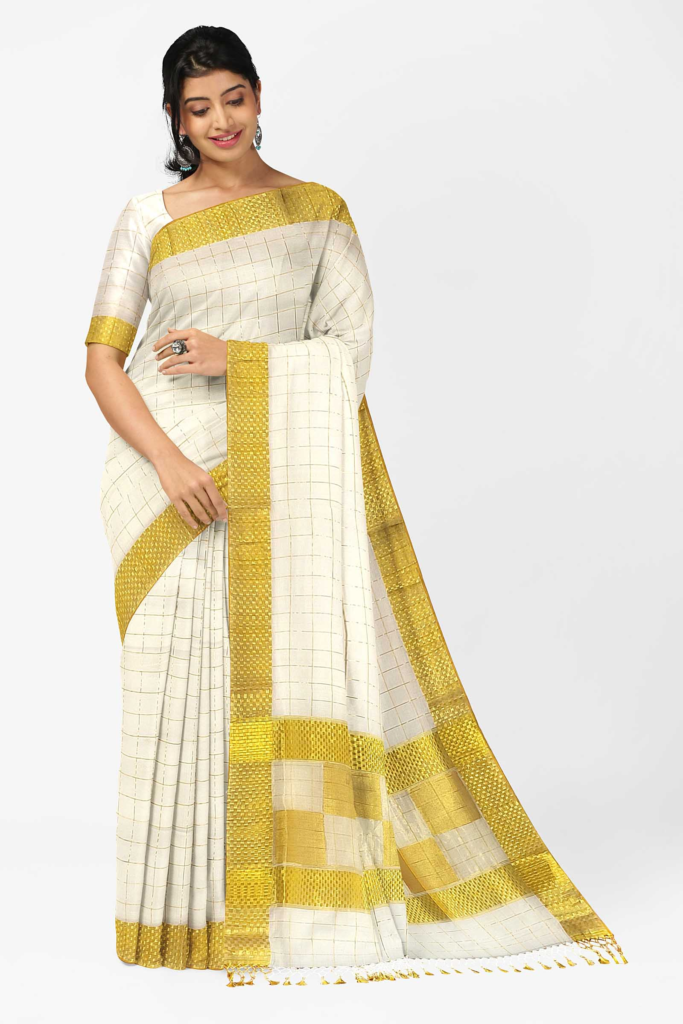
Modern designers have introduced embroidered motifs, floral patterns, peacock designs, temple borders, and colorful accents while preserving the original Kasavu style.
Double Border Kasavu Saree
Some bridal versions feature wider or double zari borders for a more regal appearance.
Choosing the Perfect Kasavu Saree
Selecting the right Kasavu saree involves several factors beyond appearance.
Fabric Quality
Look for premium cotton or silk with soft texture and durable weaving. High-quality fabrics ensure better comfort and longevity.
Border Width
The golden border significantly affects the overall look.
- Thin borders create a subtle appearance.
- Medium borders offer balanced elegance.
- Wide borders make a bold bridal statement.
Weaving
Handwoven Kasavu sarees often feature finer craftsmanship compared to machine-made versions. Their intricate detailing adds authenticity and uniqueness.
Color Accents
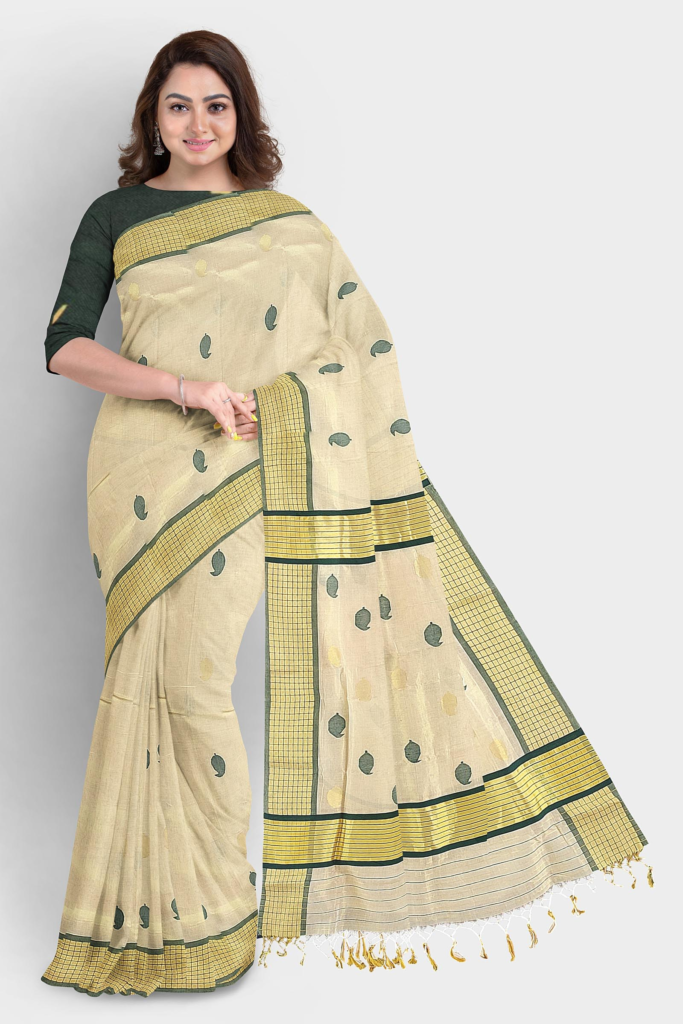
While traditional Kasavu sarees remain cream and gold, modern designs incorporate:
- Maroon
- Green
- Royal blue
- Red
- Pink
- Emerald borders
These accents provide a contemporary touch without losing traditional appeal.
Bridal Styling Tips
The beauty of a Kasavu saree is enhanced with thoughtful styling.
Traditional Gold Jewelry
Kasavu sarees pair beautifully with:
- Temple necklaces
- Long gold chains
- Kasu mala
- Jhumka earrings
- Bangles
- Waist belt (Oddiyanam)
Layering traditional jewelry creates a regal bridal appearance.
Hair Styling
South Indian bridal hairstyles often include:
- Low bun
- Braided hair
- Jasmine flower garlands
- Traditional hair accessories
Fresh flowers complement the elegance of the saree.
Makeup
Natural makeup works exceptionally well with Kasavu sarees.
Popular bridal choices include:
- Glowing skin
- Soft gold eye makeup
- Defined eyebrows
- Classic eyeliner
- Red or deep pink lipstick
The overall look should enhance the bride’s features without overpowering the simplicity of the saree.
Popular Blouse Designs
Modern brides experiment with various blouse styles.
Popular options include:
- Elbow-length sleeves
- High-neck blouses
- Boat neck designs
- Puff sleeves
- Embroidered silk blouses
- Brocade blouses
- Velvet blouses
- Contrast-colored blouses
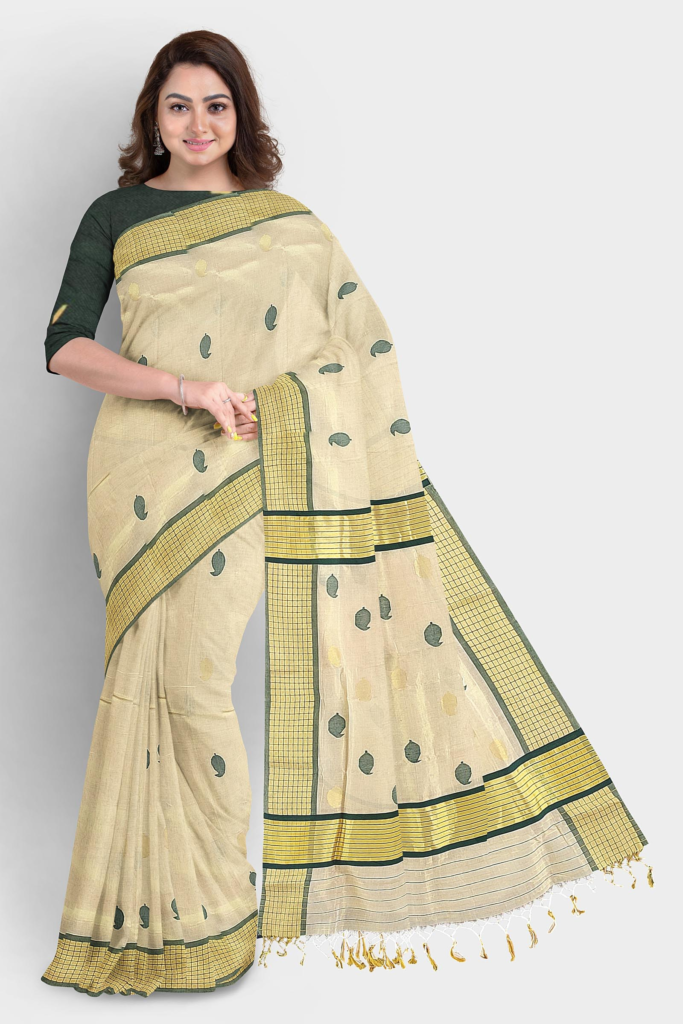
Rich blouse fabrics such as silk, brocade, and velvet create a striking contrast against the understated saree.
Kasavu Sarees Beyond Kerala
Although originally associated with Kerala, Kasavu sarees have gained popularity across South India, including Tamil Nadu, Karnataka, Andhra Pradesh, and Telangana.
Many brides outside Kerala also choose Kasavu sarees because of their timeless appeal and versatility.
Fashion designers have introduced modern interpretations suitable for destination weddings, receptions, and contemporary bridal celebrations while preserving the essence of traditional craftsmanship.
Caring for Your Kasavu Saree
Proper care helps preserve the beauty of a Kasavu saree for generations.
Helpful care tips include:
- Dry clean silk Kasavu sarees.
- Wash cotton versions gently using mild detergent.
- Avoid direct sunlight during drying.
- Fold along different lines periodically to prevent permanent creases.
- Store in a cotton cloth instead of plastic covers.
- Keep away from moisture to protect the zari.
With proper maintenance, a Kasavu saree can become a treasured family heirloom passed down through generations.
Modern Trends in Kasavu Bridal Fashion
Today’s designers continue to reinvent Kasavu sarees while respecting tradition.
Current trends include:
- Hand-painted motifs
- Floral embroidery
- Gold thread embellishments
- Contemporary blouse patterns
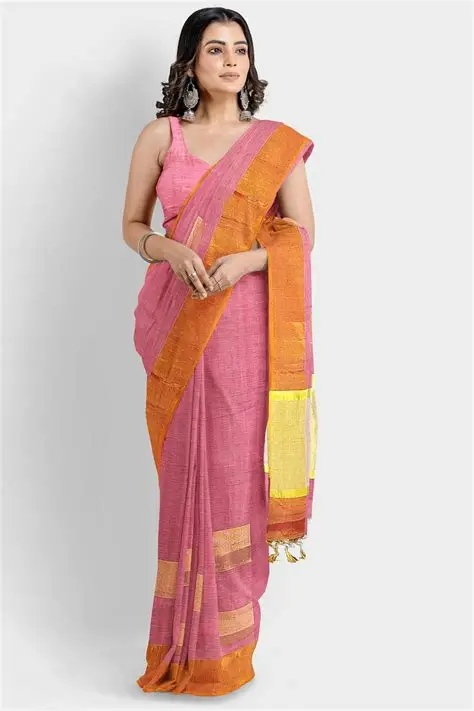
- Pastel contrast borders
- Lightweight silk blends
- Sustainable handloom fabrics
Many brides now personalize their wedding attire by pairing traditional Kasavu sarees with modern accessories, creating a perfect balance between heritage and contemporary style.
Conclusion
Kasavu sarees remain one of the most cherished bridal outfits in South India because they beautifully combine tradition, elegance, and timeless style. Their graceful ivory fabric, shimmering golden borders, and rich cultural significance make them an ideal choice for brides who want to celebrate their heritage while looking effortlessly sophisticated.
Whether you choose a classic handwoven cotton Kasavu saree or a luxurious silk designer version, this iconic attire offers unmatched elegance for your special day. Paired with traditional jewelry, fresh jasmine flowers, and thoughtful styling, a Kasavu saree creates a bridal look that is both memorable and meaningful.
For South Indian brides seeking a wedding ensemble that reflects culture, grace, and enduring beauty, the Kasavu saree continues to be a timeless symbol of love, tradition, and celebration.