
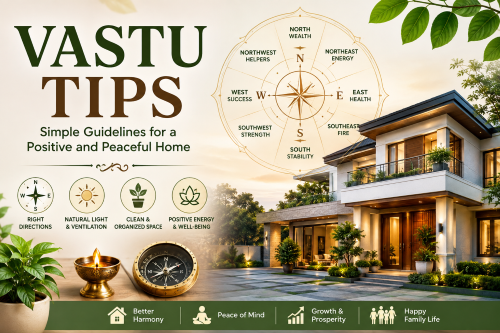
Vastu Shastra is an ancient Indian architectural tradition that focuses on the relationship between a building, its occupants, nature, and the surrounding environment. Many homeowners use Vastu principles while designing, buying, renovating, or decorating their homes. The basic idea is to create a balanced living environment by paying attention to directions, room placement, natural light, ventilation, and the arrangement of objects.
While Vastu is a traditional practice rather than a scientifically established method for improving health or financial outcomes, its practical suggestions—such as keeping rooms organized, allowing sunlight and fresh air into the home, and maintaining comfortable spaces—can contribute to a pleasant living environment.
Here are some simple Vastu tips that you can consider for different areas of your home.

What Is Vastu Shastra?
Vastu Shastra is a traditional Indian system of architecture and spatial planning. The word “Vastu” broadly refers to a dwelling or place, while Vastu Shastra provides principles concerning the design and arrangement of buildings.
Traditional Vastu places importance on the four main directions—north, south, east, and west—as well as the intermediate directions. Different parts of a home are traditionally associated with particular activities and elements.
Modern homeowners do not always follow every traditional rule. Instead, many people use selected Vastu-inspired ideas while also considering practical requirements such as safety, budget, climate, construction regulations, and personal preferences.
1. Keep the Main Entrance Clean and Welcoming
The main entrance is one of the most important areas in traditional Vastu.
Keep the entrance clean, well-lit, and free from unnecessary objects. Avoid allowing shoes, boxes, broken furniture, or other clutter to accumulate around the doorway.
A clean entrance can make the house feel more organized and welcoming.
Traditional Vastu often considers north, northeast, and east-facing entrances favorable, although the ideal entrance depends on the overall design and orientation of the property.
You can also use attractive plants, simple decorations, or a clean nameplate near the entrance.
2. Make Good Use of Natural Light
Natural light is an important feature of a comfortable home. Traditional Vastu gives particular importance to sunlight entering the house, especially from the east.
Whenever possible, keep windows and curtains arranged so that sufficient daylight can enter living spaces.
Good natural lighting can reduce the need for artificial lights during the day and make rooms feel brighter and more spacious.
However, window placement should also consider heat, privacy, ventilation, and the local climate.
3. Keep the Northeast Area Light and Open
The northeast direction has special significance in traditional Vastu.
A common Vastu recommendation is to keep the northeast portion of a home relatively open, clean, and free from heavy storage.
Avoid turning this area into a dumping space for unused furniture, boxes, or broken household items.
Some families also prefer placing a small meditation or prayer area in this direction.
4. Kitchen Placement and Arrangement
The kitchen is another important part of Vastu planning.
Traditional Vastu commonly associates the southeast direction with the kitchen and considers the southwest or northwest as alternative possibilities depending on the layout.
The cooking area should be organized and well ventilated. If possible, place the stove in a location that allows the person cooking to face east.
Keep the kitchen clean after cooking and avoid storing unnecessary items on countertops.
From a practical perspective, proper ventilation is particularly important because cooking produces heat, smoke, moisture, and odors.
5. Vastu Tips for the Bedroom
The bedroom should provide a calm environment where you can relax.
Traditional Vastu often recommends the southwest part of the house for the master bedroom. The southwest is traditionally associated with stability and grounding.
For sleeping, some Vastu traditions recommend keeping the head toward the south or east rather than the north.
Regardless of Vastu beliefs, bedroom comfort also depends on factors such as mattress quality, temperature, lighting, noise, and ventilation.
Avoid excessive electronic devices near the bed if they interfere with relaxation or sleep.
6. Keep the Living Room Organized
The living room is generally one of the most active areas of a home because family members and guests spend time there.
Arrange furniture so that people can move around comfortably. Avoid blocking doors, windows, or ventilation points.
Traditional Vastu recommendations may favor heavier furniture toward the southwest or west and more open space toward the north or east.
You can also keep the room visually balanced by avoiding excessive decorations.
7. Dining Area Tips
The dining area should be clean, comfortable, and well ventilated.
Traditional Vastu practices sometimes recommend placing dining spaces in the west, east, or southeast portions of a house depending on the overall floor plan.
A dining table should have enough space around it for people to sit and move comfortably.
Avoid leaving dirty dishes on the dining table for long periods. A clean dining environment can make family meals more enjoyable.
8. Bathroom and Toilet Considerations
Bathrooms require particular attention to hygiene, ventilation, and moisture control.
Traditional Vastu has specific recommendations regarding toilet placement, with northwest and west commonly mentioned in many Vastu systems.
However, when building or renovating a bathroom, practical considerations should come first. Proper drainage, waterproofing, ventilation, plumbing, and electrical safety are essential.
Keep the bathroom dry and clean, repair leaking taps, and ensure adequate ventilation to prevent excessive moisture and unpleasant odors.
9. Avoid Unnecessary Clutter
One of the easiest Vastu-inspired habits is to reduce clutter.
Old newspapers, broken appliances, unused clothes, damaged furniture, and miscellaneous boxes can gradually take over a home.
Regularly review your belongings and remove things you no longer need.
A clutter-free home can make cleaning easier and create more usable space. It can also make rooms appear larger and more comfortable.
Instead of treating decluttering as a one-time activity, make it part of your regular household routine.
10. Use Plants Carefully
Indoor plants can add freshness and visual appeal to a home.
Plants that thrive indoors with the available amount of sunlight can be placed in suitable areas. Avoid keeping unhealthy, dead, or decaying plants inside the house.
Traditional Vastu practices often recommend certain plants for particular directions, but plant selection should primarily depend on indoor conditions.
Choose plants according to light availability, temperature, humidity, maintenance requirements, and whether they are safe around children or pets.
11. Pay Attention to Ventilation
Fresh air is an important part of a healthy and comfortable indoor environment.
Whenever weather conditions allow, open suitable windows to improve air circulation. Cross-ventilation can be particularly useful in rooms where heat or moisture accumulates.
Traditional Vastu emphasizes the movement of energy and air through a building. From a practical perspective, good ventilation helps control humidity, odors, and indoor pollutants.
12. Keep the Center of the Home Relatively Open
The central area of a home is traditionally known as the Brahmasthan.
Many Vastu traditions recommend keeping this area open and free from heavy construction or clutter.
In modern apartments, completely open central spaces may not always be possible. However, you can avoid overcrowding the center of the home with large furniture or unnecessary storage.
An open central area can also improve movement between different rooms.
13. Home Office Vastu Tips
With more people working or studying from home, the home office has become an important space.
Traditional Vastu often associates the north, east, and northeast with study or work-related activities.
If possible, position your desk so that you have a comfortable view of the room rather than sitting directly in a cramped corner.
Make sure your workspace has adequate lighting and ventilation.
Most importantly, keep the desk organized. A clean workspace can make it easier to concentrate and manage daily tasks.
14. Vastu Tips for a Study Room
Students can create a dedicated study area that is quiet, well-lit, and free from distractions.
Traditional Vastu often recommends facing east or north while studying.
Regardless of direction, the most important practical factors are good lighting, comfortable seating, proper desk height, and a quiet environment.
Keep books and study materials organized so that the student can easily find what they need.
15. Fix Broken Items
Traditional Vastu often recommends removing broken or unused objects from the home.
From a practical perspective, damaged items can occupy valuable space and make a home look untidy.
Broken clocks, damaged furniture, unused electronics, cracked containers, and non-functional appliances should either be repaired or responsibly discarded.
This simple habit can make the home more organized.
16. Use Colors Thoughtfully
Colors can influence the visual character of a room.
Light and neutral shades can make smaller spaces appear more open, while warmer colors can create a cozy atmosphere.
Traditional Vastu associates different colors with different directions and elements. However, homeowners should also consider room size, natural light, furniture, and personal taste.
For bedrooms, many people prefer softer shades, while living rooms can accommodate a broader range of colors.
17. Keep Water Areas Clean
Water has an important place in traditional Vastu philosophy.
If your home has a water feature, aquarium, or decorative fountain, keep it clean and properly maintained.
Do not allow stagnant water to remain for long periods. Regular cleaning is important for hygiene regardless of Vastu beliefs.
If you are installing a major water tank or underground water system, follow appropriate engineering and construction guidelines rather than relying only on traditional direction recommendations.
18. Vastu Tips for a Peaceful Home
A peaceful home depends on more than room directions.
Try to maintain clean surroundings, reduce unnecessary noise, keep common spaces organized, and allow sufficient sunlight and fresh air.
Family members should also have comfortable personal spaces where they can relax.
Traditional Vastu can be used as a cultural framework for organizing your surroundings, but practical factors such as construction quality, safety, hygiene, and comfort should always remain priorities.
Final Thoughts
Vastu Shastra continues to influence home design and interior planning in India. Its traditional principles encourage people to think carefully about directions, room placement, cleanliness, natural light, ventilation, and the organization of living spaces.
You do not necessarily need to redesign your entire house to incorporate Vastu ideas. Simple steps such as keeping the entrance clean, reducing clutter, improving natural light, maintaining ventilation, organizing furniture, and creating peaceful spaces can make a noticeable difference to the overall feel of your home.
For new construction or major renovation, Vastu preferences can be discussed with an architect or qualified professional alongside structural, electrical, plumbing, safety, and local building requirements.
Ultimately, the best home is one that is safe, comfortable, functional, well-maintained, and suited to the people who live in it. Vastu tips can be considered as one traditional approach to creating such a space, while practical design principles should guide important construction decisions.



One thought on “Vastu Tips for a Positive and Peaceful Home: Simple Guidelines for Every Room”