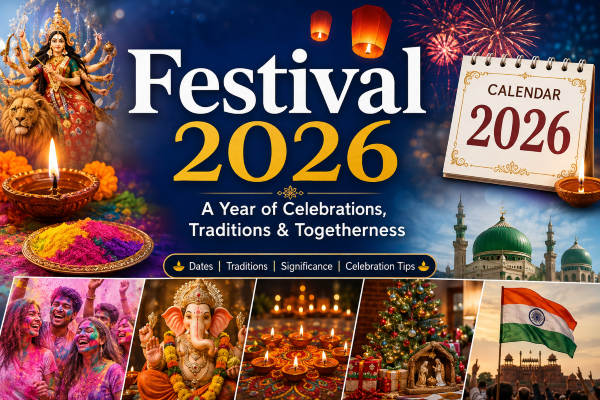
Festivals are an important part of life in India. They bring families together, create a sense of community and provide an opportunity to celebrate culture, traditions and faith. In 2026, the festival calendar once again offers a diverse mix of religious, cultural and national celebrations. From colourful Holi and the lights of Diwali to Eid, Christmas, Navratri and Independence Day, every festival has its own story and significance.
Whether you are planning family celebrations, preparing for a holiday trip or simply looking for important festival dates, understanding the Festival 2026 calendar can help you organize the year better.
Why Festivals Are Important in India
India is known for its cultural and religious diversity. Different communities celebrate different festivals, but the central idea behind many celebrations is similar: bringing people together.
Festivals often represent important historical, religious or seasonal events. They can also provide a break from everyday routines. Homes are cleaned and decorated, traditional food is prepared, new clothes are purchased and relatives and friends meet to celebrate together.
Modern celebrations have also evolved. People increasingly use social media to exchange greetings, share photographs and send digital invitations. At the same time, traditional customs remain an important part of most festivals.
Major Hindu Festivals in 2026
The Hindu festival calendar includes numerous celebrations throughout the year.
Makar Sankranti marks the transition of the Sun into Capricorn and is traditionally associated with the beginning of longer days. It is celebrated in different ways across India, including kite flying, preparing sweets and visiting family members.
Maha Shivratri is dedicated to Lord Shiva. Devotees commonly observe fasting, visit temples and perform prayers during the festival.
Holi is one of India’s most popular festivals. Known as the festival of colours, Holi brings people together with coloured powders, music, food and social gatherings. Holika Dahan, celebrated before the colour festival, has its own religious and cultural importance.
Ram Navami celebrates the birth of Lord Rama and is observed with prayers, religious programs and temple visits.
Janmashtami celebrates the birth of Lord Krishna. Temples and homes are decorated, devotional songs are performed and many devotees observe fasting.
Ganesh Chaturthi is dedicated to Lord Ganesha. Large and small celebrations take place across many parts of India, with devotees installing Ganesha idols and organizing prayers and cultural programs.
Navratri and Dussehra are among the most significant festivals of the year. Navratri is associated with the worship of Goddess Durga, while Dussehra symbolizes the victory of good over evil. Different regions have their own traditions, including Garba, Dandiya, Ram Leela performances and Durga Puja.
Diwali, the festival of lights, is one of India’s biggest celebrations. Families decorate their homes with lamps and rangoli, exchange sweets and gifts, and perform Lakshmi Puja. Many people also use the occasion to begin new financial or business activities.
Islamic Festivals in 2026
India’s festival calendar also includes important Islamic celebrations.
Ramadan is a sacred month during which Muslims observe fasting from dawn to sunset. It is also a period of prayer, charity, reflection and community.
Eid al-Fitr marks the end of Ramadan. People attend special prayers, wear traditional clothing, meet relatives and friends, and enjoy festive meals.
Eid al-Adha, also known as the Festival of Sacrifice, is another major Islamic festival. It emphasizes faith, generosity and helping others.
The exact dates of Islamic festivals can vary because they are determined according to the Islamic lunar calendar and local moon-sighting practices.
Sikh, Christian and Other Festivals
Guru Nanak Jayanti, also known as Guru Nanak Gurpurab, is an important Sikh festival celebrating the birth anniversary of Guru Nanak Dev Ji. Processions, prayers and community meals known as langars are important parts of the celebration.
Christmas, celebrated on December 25, commemorates the birth of Jesus Christ. Churches are decorated, Christmas trees are prepared and families exchange gifts. Christmas has also become a widely enjoyed cultural celebration across India.
Buddha Purnima is associated with Gautama Buddha and is observed by Buddhist communities with prayers, meditation and visits to monasteries and temples.
Mahavir Jayanti, celebrated by the Jain community, commemorates the birth of Lord Mahavira. Religious ceremonies, processions and charitable activities are commonly organized.
National Celebrations in 2026
India’s national occasions are also important dates on the annual calendar.
Republic Day, celebrated on January 26, commemorates the adoption of India’s Constitution coming into effect in 1950. The national celebration includes the famous Republic Day parade in New Delhi.
Independence Day, observed on August 15, marks India’s independence from British rule in 1947. Flag-hoisting ceremonies, cultural programs and patriotic events take place throughout the country.
Gandhi Jayanti, celebrated on October 2, marks the birth anniversary of Mahatma Gandhi. The day is associated with peace, non-violence and cleanliness initiatives.
How to Celebrate Festivals Responsibly
Festivals are enjoyable, but responsible celebration is equally important. People can reduce waste by choosing reusable decorations and avoiding unnecessary plastic products.
During Diwali, using fewer fireworks can help reduce air and noise pollution. Choosing traditional lamps and energy-efficient lighting can also make celebrations more environmentally friendly.
Food waste is another issue to consider. Preparing realistic quantities and sharing extra food with people who need it can make celebrations more meaningful.
People should also respect local traditions and different communities. Festivals are an opportunity to learn about India’s cultural diversity rather than simply focusing on entertainment.
Festival 2026: A Year of Culture and Togetherness
The Festival 2026 calendar offers plenty of opportunities to celebrate India’s rich cultural heritage. Religious festivals, national occasions and regional celebrations each contribute something unique to the country’s identity.
While dates and customs may differ from one community to another, festivals share a common message of togetherness, hope and happiness. Planning celebrations in advance can make it easier to arrange travel, shopping, family gatherings and holidays.
Most importantly, the spirit of a festival is not limited to decorations or expensive celebrations. Spending time with loved ones, helping others and respecting different traditions can make 2026 festivals more memorable and meaningful.
Note: Festival dates based on lunar calendars may vary by region and local observance. Readers should verify dates with a local religious calendar or official regional announcement before making important travel or event plans.