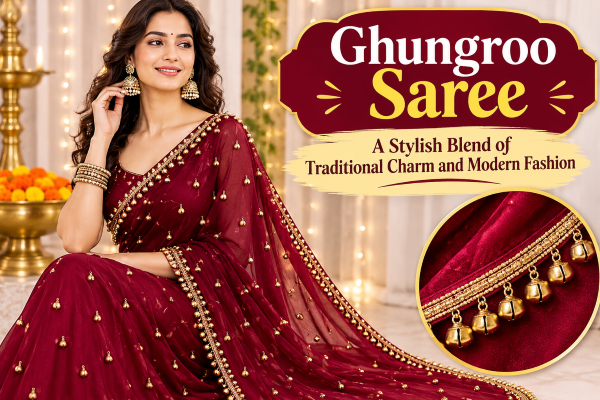
The ghungroo saree is an eye-catching fashion choice that combines the elegance of a traditional Indian saree with the playful beauty of ghungroo-inspired detailing. Ghungroo, traditionally associated with classical dance and Indian cultural performances, are small metallic bells known for their distinctive sound and decorative appeal. When this design element appears on a saree, it creates a unique look that can suit festive celebrations, cultural events, weddings, parties, and modern ethnic styling.
Today, sarees are available in many fabrics, colors, patterns, and decorative styles. The ghungroo saree stands out because of its ability to add movement, texture, and a subtle traditional touch to an otherwise contemporary outfit.
What Is a Ghungroo Saree?
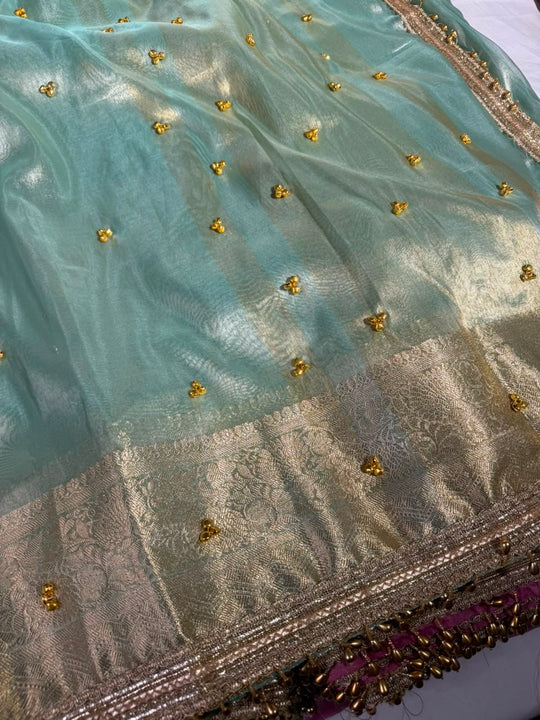
A ghungroo saree generally refers to a saree featuring ghungroo-inspired embellishments, small metallic bells, hanging details, or bell-shaped decorative elements. These details may appear along the border, pallu, blouse, or throughout selected portions of the saree.
The design can vary significantly. Some sarees use tiny decorative ghungroo for a delicate appearance, while others feature larger metallic elements for a more dramatic festive look. The saree may be made from silk, chiffon, georgette, organza, cotton, crepe, or other fabrics.
Because of this variety, ghungroo sarees can work for both traditional and contemporary wardrobes.
Why Ghungroo Sarees Are Becoming Popular
Fashion trends increasingly combine traditional Indian craftsmanship with modern styling. The ghungroo detail fits naturally into this movement.
One reason for its appeal is its distinctive appearance. A saree with decorative bell details can look more interesting than a plain saree without becoming excessively complicated. The metallic accents can also catch the light, adding a festive quality to the outfit.
Another advantage is versatility. Depending on the fabric, color, embellishment, and blouse design, the same basic concept can be styled for a wedding, festival, cultural program, dinner party, or special family gathering.
Popular Ghungroo Saree Designs
There are several ways designers can incorporate ghungroo elements into sarees.
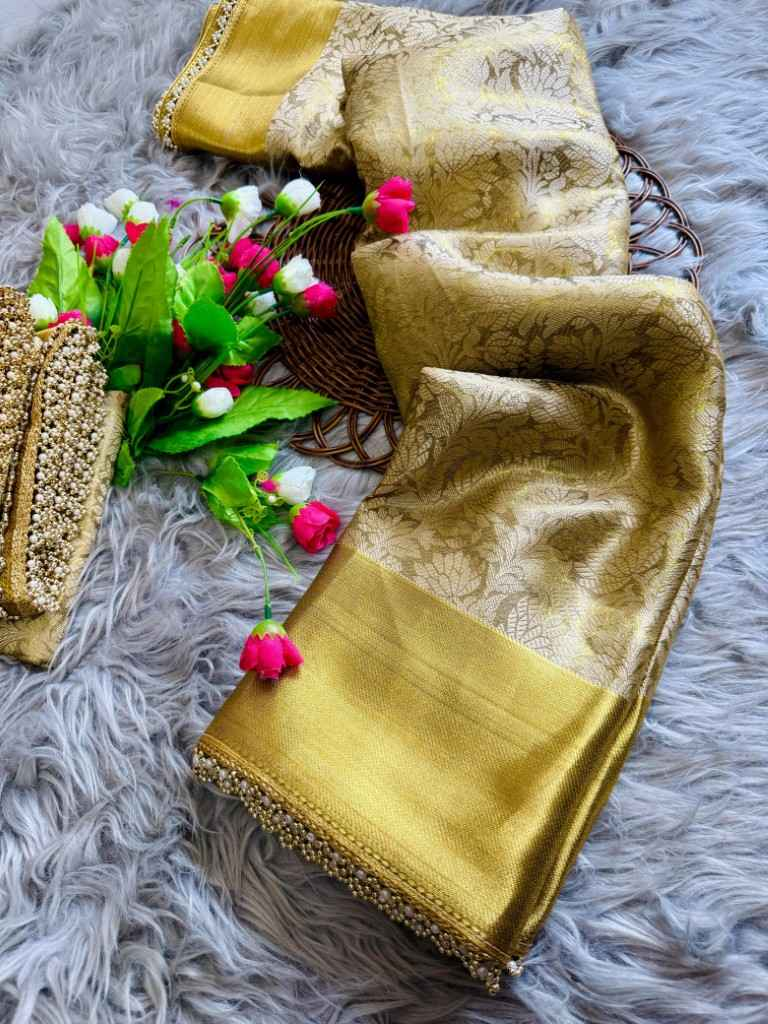
1. Ghungroo Border Saree
A saree with a ghungroo border is one of the easiest versions to style. Small bells or metallic decorations are placed along the lower border or pallu.
This design works particularly well when the rest of the saree has a simple finish. The border becomes the main decorative feature without overwhelming the overall appearance.
2. Ghungroo Pallu Saree
In this style, the pallu receives most of the decorative attention. Ghungroo elements may be arranged along the edges or combined with embroidery, sequins, beads, or zari work.
It can be a good choice for occasions where the pallu remains an important part of the overall look.
3. Embroidered Ghungroo Saree
Some designs combine ghungroo details with traditional embroidery. Floral motifs, paisley patterns, geometric designs, and thread work can be used alongside metallic embellishments.
This combination creates a richer ethnic appearance and can work particularly well for festive occasions.
4. Lightweight Ghungroo Saree
For people who prefer comfortable clothing, lightweight fabrics such as chiffon, georgette, and organza can offer a practical option. Small decorative elements can provide the traditional effect while keeping the saree visually light.
These sarees can be suitable for parties, festive gatherings, and evening events.
Best Fabrics for a Ghungroo Saree
The choice of fabric can completely change the personality of a ghungroo saree.
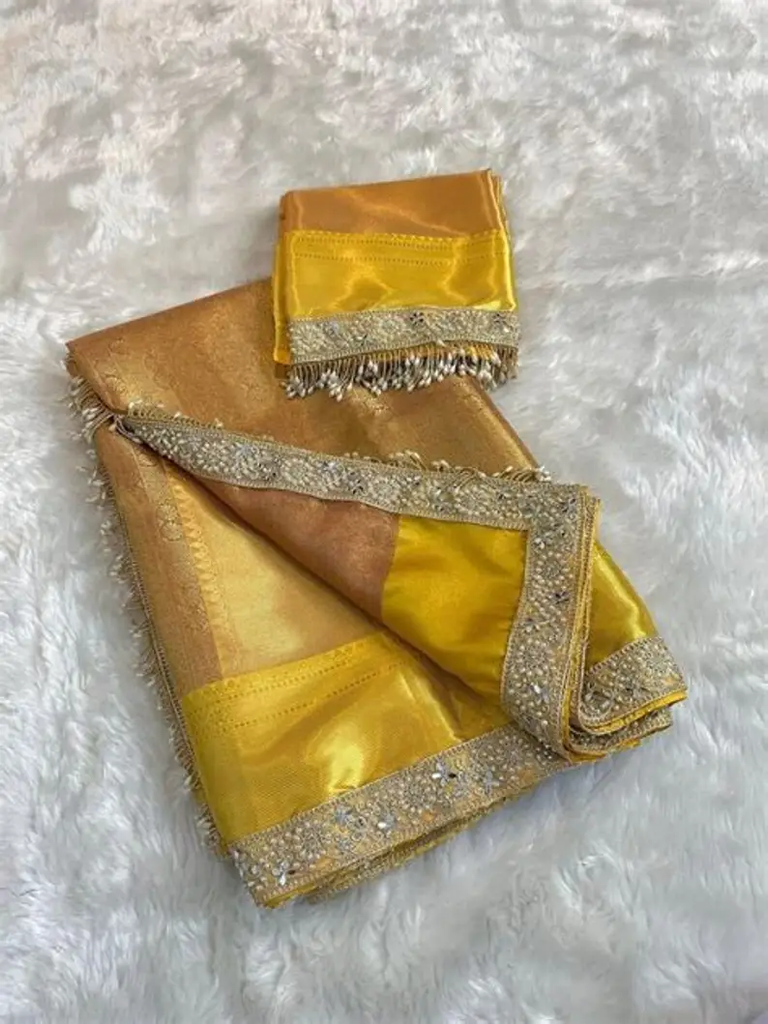
Silk offers a rich and traditional appearance. A silk saree with metallic detailing can be suitable for weddings and major celebrations.
Georgette provides a softer and more fluid drape. It is often preferred for contemporary saree styling.
Chiffon creates a lightweight and graceful appearance and can work well for evening occasions.
Organza has a structured, slightly transparent appearance that gives the saree a modern and elegant character.
Cotton can be a practical choice for daytime events, especially when the ghungroo detailing is subtle.
How to Style a Ghungroo Saree
The blouse plays an important role in balancing the decorative elements of the saree. If the saree already contains noticeable ghungroo embellishments, a simple blouse can create a polished look.
For a more traditional appearance, a blouse with embroidery, zari work, or traditional motifs can complement the saree. For a modern outfit, a sleeveless, halter-neck, square-neck, or contemporary blouse can create contrast.
Jewellery should also be selected carefully. Since ghungroo details already introduce metallic decoration, excessive jewellery may make the outfit appear crowded. Statement earrings, traditional bangles, or a simple necklace can be enough.
A neat bun decorated with flowers can enhance a traditional look, while open waves can give the outfit a more contemporary appearance.
Occasions to Wear a Ghungroo Saree
A ghungroo saree can be adapted for many occasions.
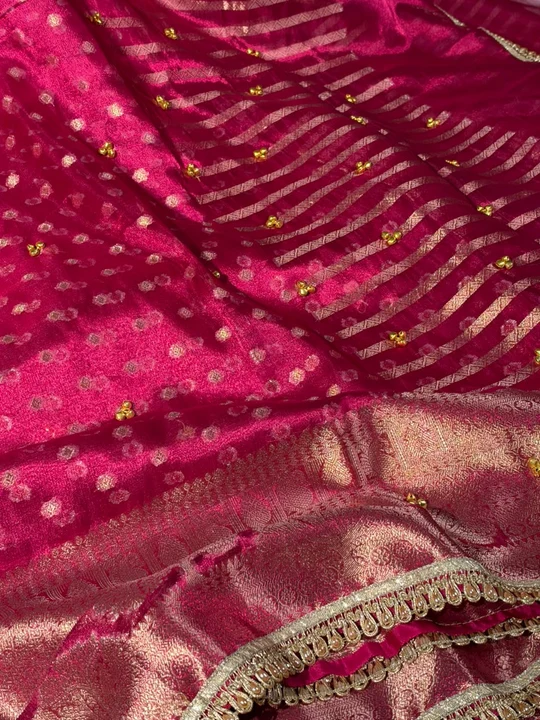
For weddings, richer fabrics and heavier embellishments can create a glamorous appearance. For festivals, bright colors such as red, pink, yellow, green, or orange can provide a lively ethnic look.
For cultural programs and dance events, ghungroo-inspired detailing has a natural connection with Indian performing arts.
For parties, a modern blouse paired with a lightweight ghungroo saree can create a stylish fusion outfit.
For family celebrations and traditional ceremonies, a moderately embellished saree can provide an elegant balance between comfort and decoration.
Choosing the Right Ghungroo Saree
When selecting a ghungroo saree, consider the occasion first. A heavily decorated saree may be better suited to weddings and evening celebrations, while a lightweight design can be more comfortable for daytime events.
Color is another important factor. Deep shades such as wine, navy, emerald, maroon, and black can create a sophisticated appearance. Pastel shades can provide a softer and more contemporary look, while bright colors are suitable for festive celebrations.
Also pay attention to the weight and placement of the ghungroo elements. Decorative bells should complement the saree rather than make it unnecessarily heavy or difficult to manage.
Care Tips for Ghungroo Sarees
Ghungroo embellishments require some additional care. Avoid placing heavy objects on the saree because metallic decorations can become tangled or damaged.
Follow the fabric’s recommended washing instructions. For delicate or heavily embellished sarees, professional dry cleaning may be preferable.
When storing the saree, fold it carefully and keep it in a clean, dry place. Wrapping delicate embellished areas in soft muslin fabric can help protect them from friction.
Conclusion
The ghungroo saree offers an attractive way to combine Indian tradition with contemporary fashion. Its distinctive metallic details can add movement, texture, and festive character to different saree styles. Whether designed with a simple border, decorative pallu, embroidery, or elaborate embellishments, it can be adapted for weddings, festivals, cultural occasions, parties, and family celebrations.
The key to wearing this style successfully is balance. Choosing the right fabric, color, blouse, jewellery, and level of embellishment can transform a ghungroo saree into an elegant and memorable ethnic outfit. As Indian fashion continues to explore new combinations of traditional craftsmanship and modern design, ghungroo-inspired sarees remain an interesting choice for women looking to add something distinctive to their wardrobe.