
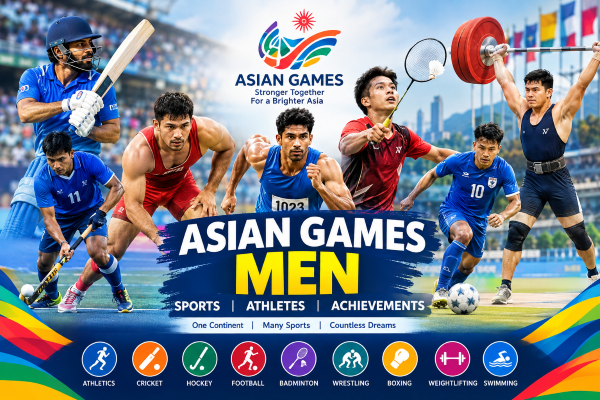
The Asian Games men’s events represent some of the most competitive sporting contests in Asia. From athletics and swimming to cricket, hockey, football, wrestling and badminton, male athletes from across the continent compete for medals and national pride. The Asian Games also provide an important platform for emerging athletes who later compete at the Olympic Games and other international championships.
The term “Asian Games men” can refer to men’s competitions across different sports, as well as the overall participation and achievements of male athletes at the Asian Games. This article explains the history, major sports, qualification system, famous performances and importance of these events.
What Are the Asian Games?
The Asian Games are a major multi-sport event for athletes representing countries and territories across Asia. They are organized under the Olympic Council of Asia (OCA) and are generally held every four years.
The first edition was held in 1951 in New Delhi, India. Since then, the event has developed into one of the biggest multi-sport competitions in the world.
Men participate in a wide range of individual and team sports. Depending on the edition, the program can include athletics, swimming, boxing, wrestling, shooting, archery, badminton, table tennis, football, hockey, cricket and many other disciplines.
Popular Men’s Sports at the Asian Games
The Asian Games include numerous men’s events. Some sports have traditionally attracted particularly strong attention from fans.
Athletics
Athletics is one of the most important sports at the Asian Games. Men compete in events such as the 100 metres, 200 metres, 400 metres, middle-distance races, long-distance races, hurdles, relays, long jump, high jump, shot put, discus throw and javelin throw.
Asian countries have produced internationally recognized athletes in several of these disciplines. Success at the Asian Games can also help athletes gain experience before major global competitions.
Men’s Cricket
Cricket has become an important part of the Asian Games program during editions in which it has been included. Men’s cricket has attracted considerable attention because several major cricket-playing nations are located in Asia.
The format can vary depending on the edition. Teams compete through group matches and knockout stages, with medals awarded to the top-performing sides.
Men’s Hockey
Field hockey has a long history at the Asian Games. Men’s hockey teams from countries such as India, Pakistan, South Korea, Japan and Malaysia have created memorable contests over the years.
The competition is particularly significant because Asian hockey teams also compete at the Olympic Games and World Cup. Asian Games results can therefore have an important place in the region’s hockey calendar.
Men’s Football
Men’s football is another widely followed Asian Games competition. National teams send squads according to the eligibility rules established for the particular edition.
The tournament gives younger footballers an opportunity to represent their countries at a major international event. Several players have used Asian Games experience as part of their development toward senior national teams.
Badminton
Men’s badminton includes singles, doubles and team competitions, depending on the edition. Asian countries have traditionally been among the strongest nations in world badminton.
China, Indonesia, Japan, India, South Korea and other nations have produced world-class badminton players. Asian Games matches can therefore feature some of the sport’s most technically skilled competitors.
Wrestling and Combat Sports
Wrestling is one of the major medal sports for several Asian nations. Men compete in different weight categories and styles according to the competition program.
Other combat sports, including boxing, judo, karate, taekwondo and wushu, also provide opportunities for male athletes to compete for Asian Games medals.
These events require a combination of technical ability, physical preparation, tactical planning and discipline. Winning an Asian Games medal can be a significant achievement in an athlete’s career.
Indian Men at the Asian Games
India has a long association with the Asian Games and has participated in the event since its first edition in New Delhi in 1951.
Indian male athletes have won medals in athletics, wrestling, shooting, boxing, badminton, hockey, archery, rowing, weightlifting and several other sports.
One of the most memorable names in Indian Asian Games history is Milkha Singh, who won the men’s 400-metre gold medal at the 1958 Asian Games in Tokyo. He later won another gold medal at the 1962 Asian Games in Jakarta.
In more recent years, Indian athletes have continued to perform strongly across different disciplines. Javelin throw, wrestling, shooting, boxing, badminton and athletics have become important areas of interest for Indian sports followers.
How Men’s Events Work
The competition format depends on the sport. Individual sports may use qualifying rounds followed by finals, while team sports normally involve group stages and knockout rounds.
Athletes and teams must meet eligibility requirements set by the organizers and their respective international sports federations. National Olympic committees generally select the athletes who represent their countries.
Medals are awarded for first, second and third place. The medal results contribute to the overall Asian Games medal table.
Why the Asian Games Matter
For male athletes, the Asian Games offer several important opportunities.
First, they provide international competition against some of the strongest athletes in Asia. Second, they allow younger competitors to gain experience in a large multi-sport environment. Third, success can increase an athlete’s profile at home and internationally.
The event is also important for sports development. Countries can use Asian Games performances to identify promising athletes, strengthen training programs and increase public interest in less widely followed sports.
Asian Games Men: A Platform for Future Champions
Many Asian athletes use the Asian Games as an important step in their careers. A successful performance can build confidence and provide valuable experience before competitions such as the Olympics, World Championships and continental championships.
The event also demonstrates the diversity of Asian sport. Different countries have different sporting strengths, creating interesting competition across the medal program.
Conclusion
The Asian Games men’s competitions cover a broad range of sports and bring together thousands of athletes from across Asia. From athletics and wrestling to cricket, hockey, football and badminton, men compete at a high level for medals and national recognition.
For India and other Asian countries, these competitions are more than individual sporting contests. They provide opportunities to develop athletes, encourage young talent and strengthen sporting traditions. As Asian sport continues to grow, men’s events at the Asian Games will remain an important part of the continent’s international sporting calendar.



One thought on “Asian Games Men: History, Sports, Athletes and What to Know”