
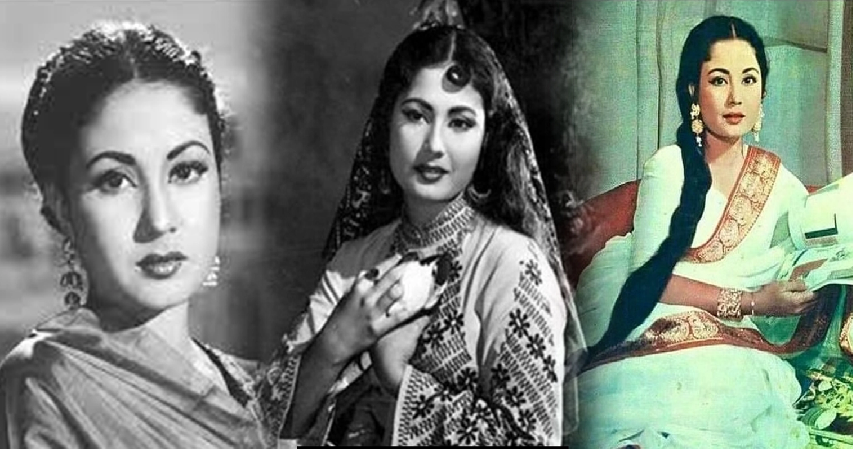
Meena Kumari remains one of the most respected names in the history of Indian cinema. Known for her emotional performances, expressive eyes and unforgettable screen presence, she earned the title “Tragedy Queen” because of the intense characters she portrayed in films. Even decades after her death, her movies continue to attract audiences, and her life story remains a subject of interest for cinema lovers.
Born as Mahjabeen Bano, Meena Kumari experienced both fame and hardship from an early age. Her journey from a child artist to one of Hindi cinema’s most celebrated actresses is filled with remarkable achievements, personal struggles and artistic milestones.
Early Life of Meena Kumari

Meena Kumari was born on August 1, 1932, in Bombay, then part of British India. Her family had connections with the performing arts. Her father, Ali Bux, worked as a theatre artist and musician, while her mother, Iqbal Begum, was also associated with the performing world.

Financial difficulties affected the family, and Meena Kumari entered films as a child artist. She was reportedly only a young girl when she began working in cinema. Acting was not simply a career choice for her in those early years; it became an important source of support for her family.
Her childhood was therefore very different from that of most children. While others went to school and enjoyed a normal childhood, she spent much of her early life working in film studios.

From Child Artist to Leading Actress
Meena Kumari initially appeared in films under different names before becoming widely known as Meena Kumari. Her early work helped her understand the craft of acting and the demands of the film industry.
During the 1940s and early 1950s, she gradually moved from child roles to adult characters. Her career changed significantly as filmmakers began recognizing her ability to express complicated emotions.
Films such as Baiju Bawra (1952) played an important role in establishing her as a major actress. Her performance brought her widespread recognition and helped her move into the leading position in Hindi cinema.
The success of Baiju Bawra also demonstrated that Meena Kumari could carry emotionally demanding roles with remarkable maturity.
The Rise of the “Tragedy Queen”

Meena Kumari became particularly famous for playing women dealing with loneliness, sacrifice, heartbreak and difficult social circumstances. Her ability to communicate emotion without excessive dialogue made her performances especially powerful.
Her expressive face and controlled acting style became trademarks. She did not always need dramatic speeches to convey sadness. A look, pause or change in expression could communicate what a character was feeling.
This led to the popular description “Tragedy Queen of Indian Cinema.”
However, reducing her career only to tragic roles would be unfair. She also appeared in romantic, social, musical and lighter films, demonstrating considerable versatility.
Meena Kumari and Guru Dutt’s Sahib Bibi Aur Ghulam

One of the most celebrated performances of Meena Kumari’s career came in Sahib Bibi Aur Ghulam (1962), directed by Abrar Alvi and associated with the creative world of Guru Dutt.
She played Chhoti Bahu, a woman struggling with loneliness and neglect within a declining aristocratic household.
The character became one of the defining roles of her career. Meena Kumari portrayed Chhoti Bahu’s emotional transformation with extraordinary sensitivity.
The film is still regarded as an important work of classic Hindi cinema, and her performance remains one of the major reasons for its lasting reputation.
Marriage to Kamal Amrohi

Meena Kumari’s personal life attracted considerable attention, particularly her marriage to filmmaker and writer Kamal Amrohi.
The couple married in 1952. Their relationship later became complicated, with professional and personal differences affecting their marriage.
Their association was also important creatively because Amrohi directed Meena Kumari in what would become one of the most significant films of her career—Pakeezah.
Their relationship has been discussed extensively in books and accounts about classic Bollywood, although some details of their private lives remain subject to differing interpretations.
Pakeezah: The Film That Became Her Legacy

If there is one film that is inseparable from Meena Kumari’s legacy, it is Pakeezah.
The film took many years to complete and eventually reached cinemas in 1972. Meena Kumari played Sahib Jaan, a courtesan whose life is shaped by love, social prejudice and the desire for dignity.
The movie was visually rich and featured memorable music, costumes and performances. Meena Kumari’s portrayal gave the character emotional depth.
Interestingly, Pakeezah was released only weeks before her death. Although the film did not initially become the enormous commercial success that it later became, its reputation grew over time.
Today, Pakeezah is considered a landmark of Hindi cinema and an essential part of Meena Kumari’s artistic legacy.

Meena Kumari as a Poet
Meena Kumari was not only an actress. She also had a strong interest in poetry and wrote under the pen name Naaz.
Her poetry reflected themes such as loneliness, love, pain and introspection. These subjects also appeared frequently in the characters she played on screen.
Her literary side provides another perspective on her personality. Away from the cameras, she was deeply interested in words and emotional expression.

Her poems and writings have continued to attract interest among readers and admirers of classic Hindi cinema.
Major Films of Meena Kumari
Throughout her career, Meena Kumari appeared in numerous films. Some of the most notable include:
- Baiju Bawra (1952)
- Parineeta (1953)
- Azaad (1955)
- Sharada (1957)
- Dil Apna Aur Preet Parai (1960)
- Sahib Bibi Aur Ghulam (1962)
- Main Chup Rahungi (1962)
- Kaajal (1965)
- Phool Aur Patthar (1966)
- Mere Apne (1971)
- Pakeezah (1972)
These films show the range of her career and her ability to work across different genres.

Awards and Recognition
Meena Kumari was among the most acclaimed actresses of her generation. She won several major honors during her career, including multiple Filmfare Awards for Best Actress.
Her performances helped establish a standard for emotional acting in Hindi cinema. Later generations of actresses have often been compared with her, particularly when discussing performances involving complex emotional characters.
Her importance is not limited to awards. Her greatest achievement is perhaps the lasting cultural influence of her performances.
Final Years and Death
Meena Kumari’s later years were marked by personal difficulties and serious health problems. Her demanding professional life and struggles outside the screen affected her considerably.
She died on March 31, 1972, at the age of 38.
Her death came shortly after the release of Pakeezah. The news shocked the Hindi film industry and her enormous fan base.
Her passing at such a young age added another layer to the tragic image that had already surrounded her screen persona.
Meena Kumari’s Legacy Today
More than five decades after her death, Meena Kumari continues to remain relevant.

Her films are regularly discussed by film historians, restored and revisited by new audiences. Classic cinema enthusiasts continue to watch Pakeezah, Sahib Bibi Aur Ghulam, Baiju Bawra and her other important works.

Her influence can also be seen in discussions about female characters in Indian cinema. She portrayed women who were often trapped by social expectations, unhappy relationships and unequal circumstances.
Her performances gave these characters emotional complexity instead of presenting them simply as victims.
Why Meena Kumari Is Still Remembered

Meena Kumari’s appeal goes beyond nostalgia. Her performances continue to feel powerful because the emotions she portrayed—love, loneliness, disappointment, sacrifice and hope—are universal.
She also represents an important period in the development of Hindi cinema. Her career crossed the transition from the early post-independence film industry to the mature studio era of the 1960s and early 1970s.
For many viewers, she remains the perfect example of an actor who could make silence as expressive as dialogue.
Conclusion
Meena Kumari was much more than the “Tragedy Queen” of Bollywood. She was a child artist who grew into an extraordinary actress, a poet, a cultural icon and one of the defining performers of classic Hindi cinema.
Her life contained both extraordinary professional success and difficult personal experiences. Films such as Baiju Bawra, Sahib Bibi Aur Ghulam and Pakeezah have ensured that her work remains part of India’s cinematic heritage.
Even today, Meena Kumari’s name evokes a particular kind of elegance and emotional depth. Her career may have ended far too soon, but her performances continue to live on. That enduring connection with audiences is perhaps the strongest proof of her place among the great legends of Indian cinema.